Soldier, settler, laborer, and the first known American-born McGarvey in this direct line. This reconstruction follows a Washington County, Maryland-born son of Irish parents whose records stretch from Ohio settlement to Regular Army service, Civil War cavalry service, late-life institutional care, and a complicated trail of age and service identities.
Matthew McGarvey stands at the turning point between the family’s immigrant past and its American branch. The strongest evidence now points to a birth around 1802 in Washington County, Maryland, with both parents born in Ireland. By 1830, he appears to have moved into Lawrence County, Ohio, where he married Eunice Grimes in 1835 and began the Ohio family line that later connects to Hamilton McGarvey and Jackson County.
Grand Review of the Armies, Washington, D.C., May 1865.
Narrative Overview
Historical Interpretation
This page reconstructs Matthew McGarvey’s life from a trail of records that is unusually rich, but often inconsistent: birthplace, age, military identity, family movement, and late-life care all have to be read together.
The records do not yet name Matthew’s Irish-born parents, but they do begin to show the world their son entered, first in Washington County, Maryland, and then in the early Ohio communities where the McGarvey line took root. His identification is strengthened by military records that preserve not only his birthplace and service history, but also physical-description details such as height, hair color, eye color, and complexion
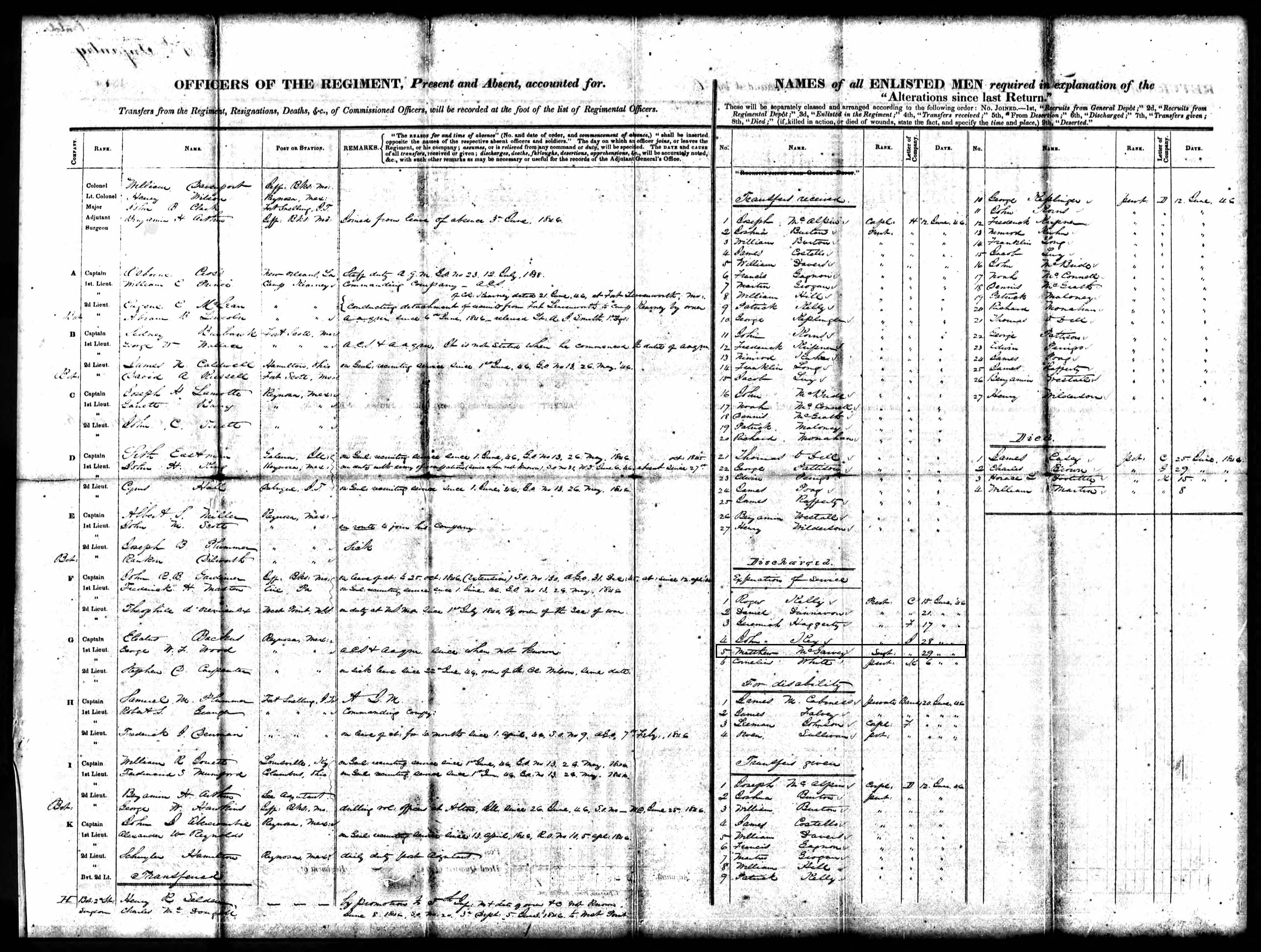
Army enlistment registerCompany descriptive book.
The narrative that follows moves through several overlapping histories: Irish family origins, early settlement in Ohio, Regular Army service that ended in 1846, later Civil War service, and a series of records that repeatedly disagree about his age. The central task is not simply to collect records, but to decide which records deserve the most weight and how they fit together as one life.
Section I
Early Life and Origins
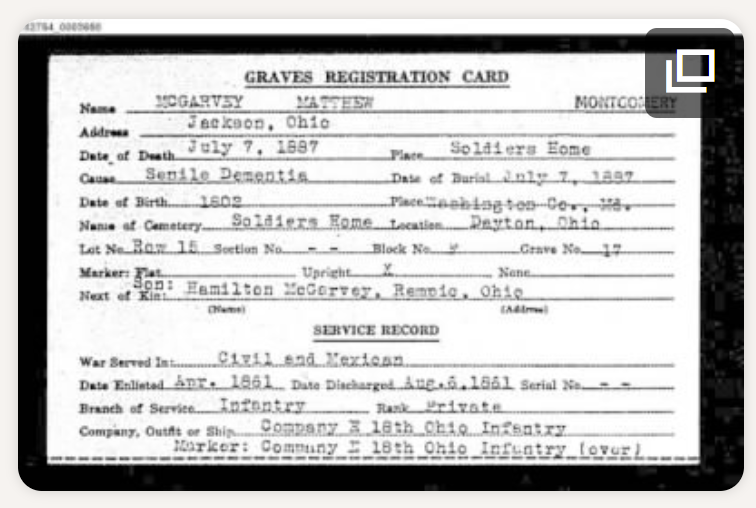
Matthew McGarvey’s earliest origins remain partly hidden, but the strongest surviving evidence points to a birth about 1802 in Washington County, Maryland. His later graves registration card gives 1802 as his birth year and records his birthplace as Washington County, while the Soldiers’ Home record also identifies his birthplace as Maryland, Washington County Graves registration cardSoldiers’ Home register. These records suggest that Matthew was part of the first American-born generation of this McGarvey line, likely born to Irish-born parents whose names have not yet been confirmed.
That parentage gap matters because it shows where the evidence trail breaks. If Matthew was born in Washington County, Maryland, to Irish parents, the family may have moved through the same migration corridor used by many early nineteenth-century families who left western Maryland and Pennsylvania for southern Ohio. Lawrence County, Ohio, then becomes the first place where Matthew can be placed with stronger documentary confidence.
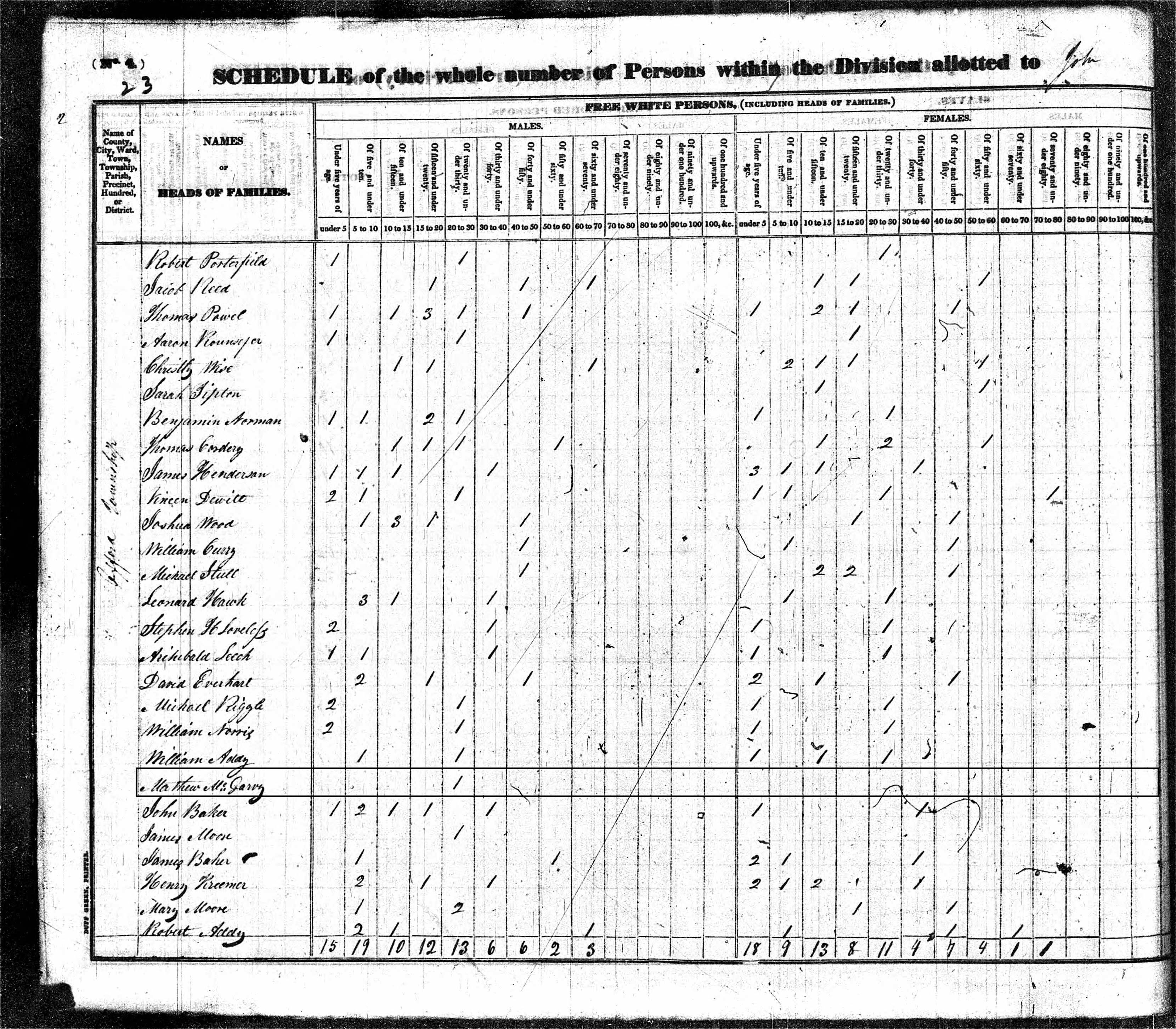
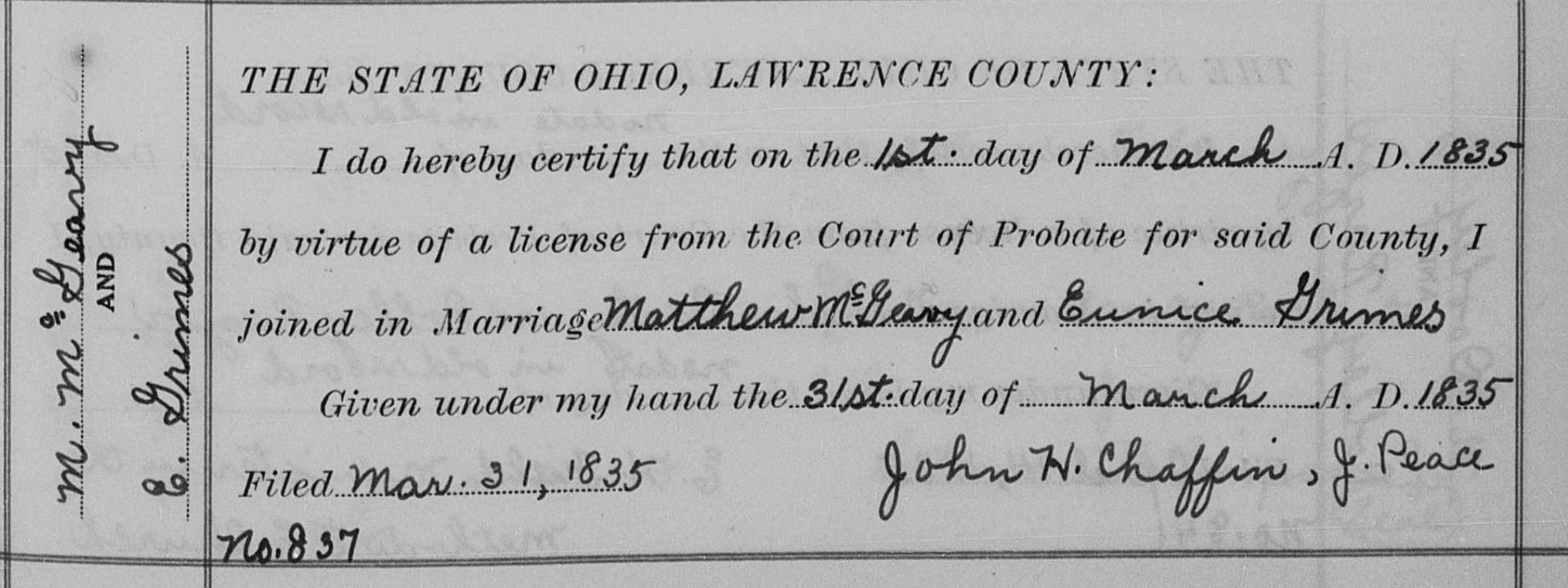
By 1830, a Mathew McGarvey or close surname variant appears in Elizabeth Township, Lawrence County, Ohio, with one male in the 20 to 30 age category 1830 census. Five years later, Matthew McGarvey married Eunice Grimes in Lawrence County on March 1, 1835, before Justice of the Peace John H. Chaffin 1835 marriage record. Together, those two records show that Matthew had reached Ohio before his marriage and was already part of the Lawrence County community by the early 1830s.
The Ohio records also suggest that Matthew’s story should be read as both a family migration and a frontier settlement story. His Maryland birthplace, probable Irish family background, appearance in Lawrence County by 1830, and marriage into the Grimes family in 1835 all point to a westward movement before the fuller military and household records begin. By the time Matthew enters the record with confidence, he is already part of the southern Ohio borderland, connected to a local family network and living in a community shaped by migration from Maryland, Pennsylvania, Virginia, and Ireland.
Section II
Marriage, Family, and Household Disruption
Matthew McGarvey’s documented family life begins in Lawrence County, Ohio, where he married Eunice Grimes on March 1, 1835 1835 marriage record. That marriage tied Matthew to the local Grimes family network. The nearby appearance of Hamilton Grimes in later records is especially important because Hamilton McGarvey, Matthew and Eunice’s son, may have been named for a Grimes relative 1840 census.
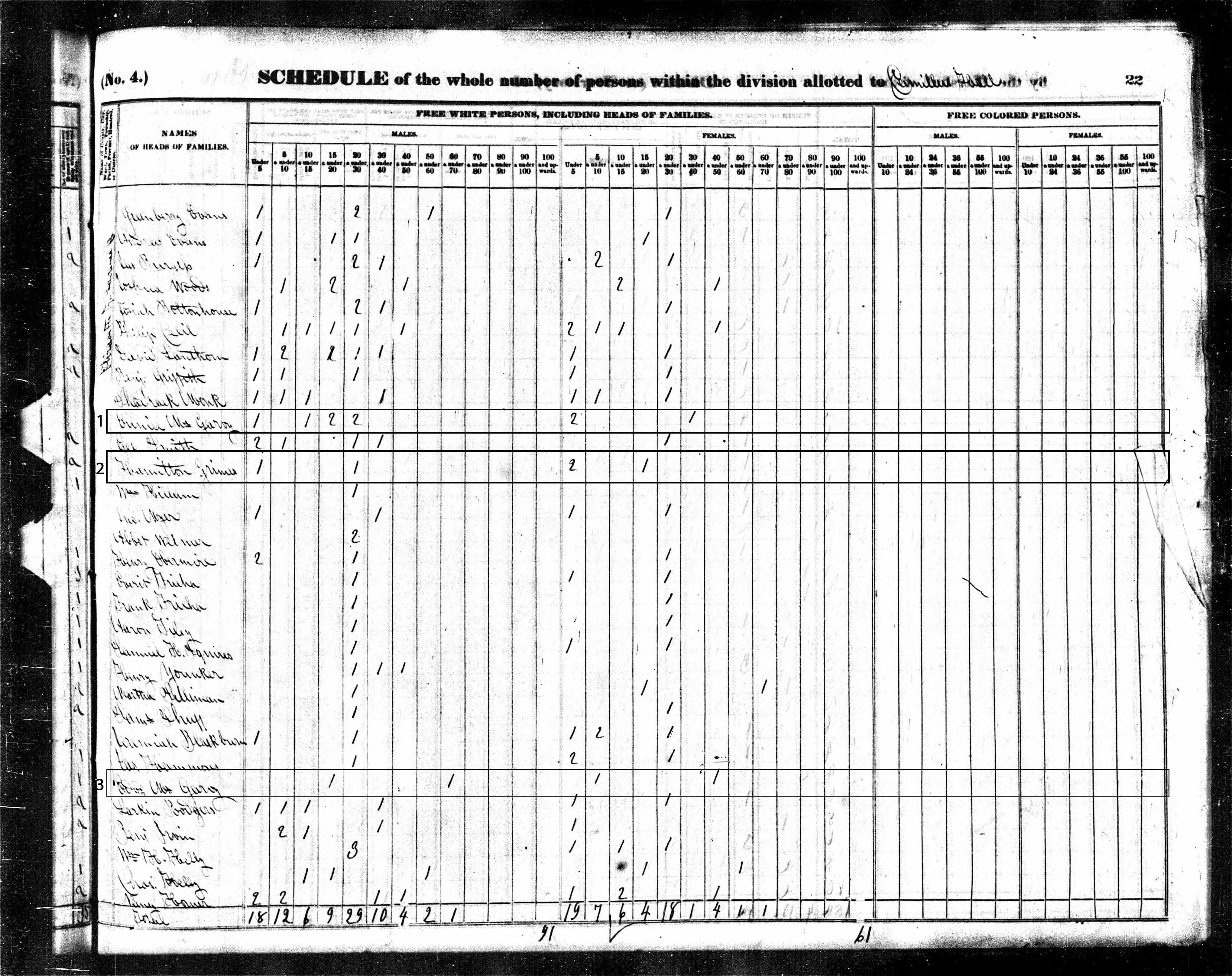
By 1840, Eunice appears as the head of household in Elizabeth Township, Lawrence County, while Matthew is absent from the listed household 1840 census. The youngest children in that household fit the known family pattern: Mary McGarvey, born about 1835, Hamilton McGarvey, born in 1837, and Elizabeth McGarvey, born in 1839. The same census also shows additional adults in the household, suggesting that Eunice may have been living with relatives, boarders, laborers, or members of the wider McGarvey or Grimes family network while Matthew was away.
Research Lead: Edward McGarvey
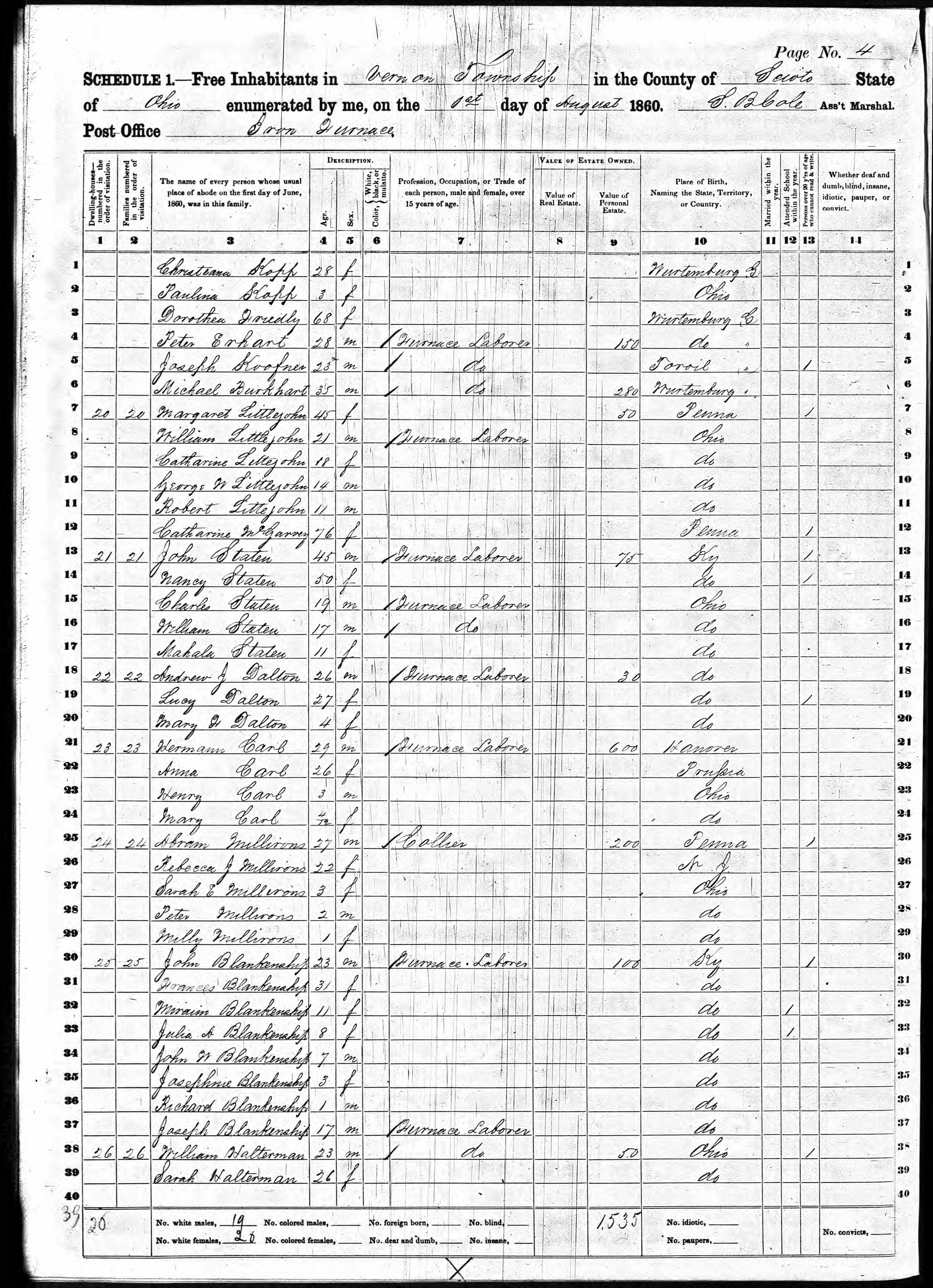
Edward McGarvey is a possible older McGarvey relative worth tracking, but not a proven member of Matthew's immediate family. The circumstantial pattern is suggestive: an Edward McGarvey married Catherine Myers in Washington County, Maryland, in 1808 1808 marriage record, the same county later named as Matthew's birthplace; an Edward McGarry or McGarvey appears in an 1820 Pennsylvania household on the westward route from Maryland 1820 census; an Edward McGarvey appears near Eunice McGarvey and Hamilton Grimes on the 1840 Elizabeth Township, Lawrence County, Ohio census page 1840 census; an elderly Edward McGarvey, born in Ireland, appears with Catherine in Belmont County, Ohio, in 1850 1850 census; and Catherine McGarvey appears without Edward in 1860 near the Littlejohn family, consistent with the reported marriage of Edward and Catherine's daughter Margaret into that family and suggesting that Edward may have died between 1850 and 1860 1860 census.
The evidence supports a research hypothesis only. These records do not name Matthew as Edward's son, brother, nephew, or cousin, and they do not prove that the Edward in each record is the same man. They do, however, identify a plausible older Irish-born McGarvey moving through the same Maryland-to-Ohio world in which Matthew's early life appears to have unfolded.
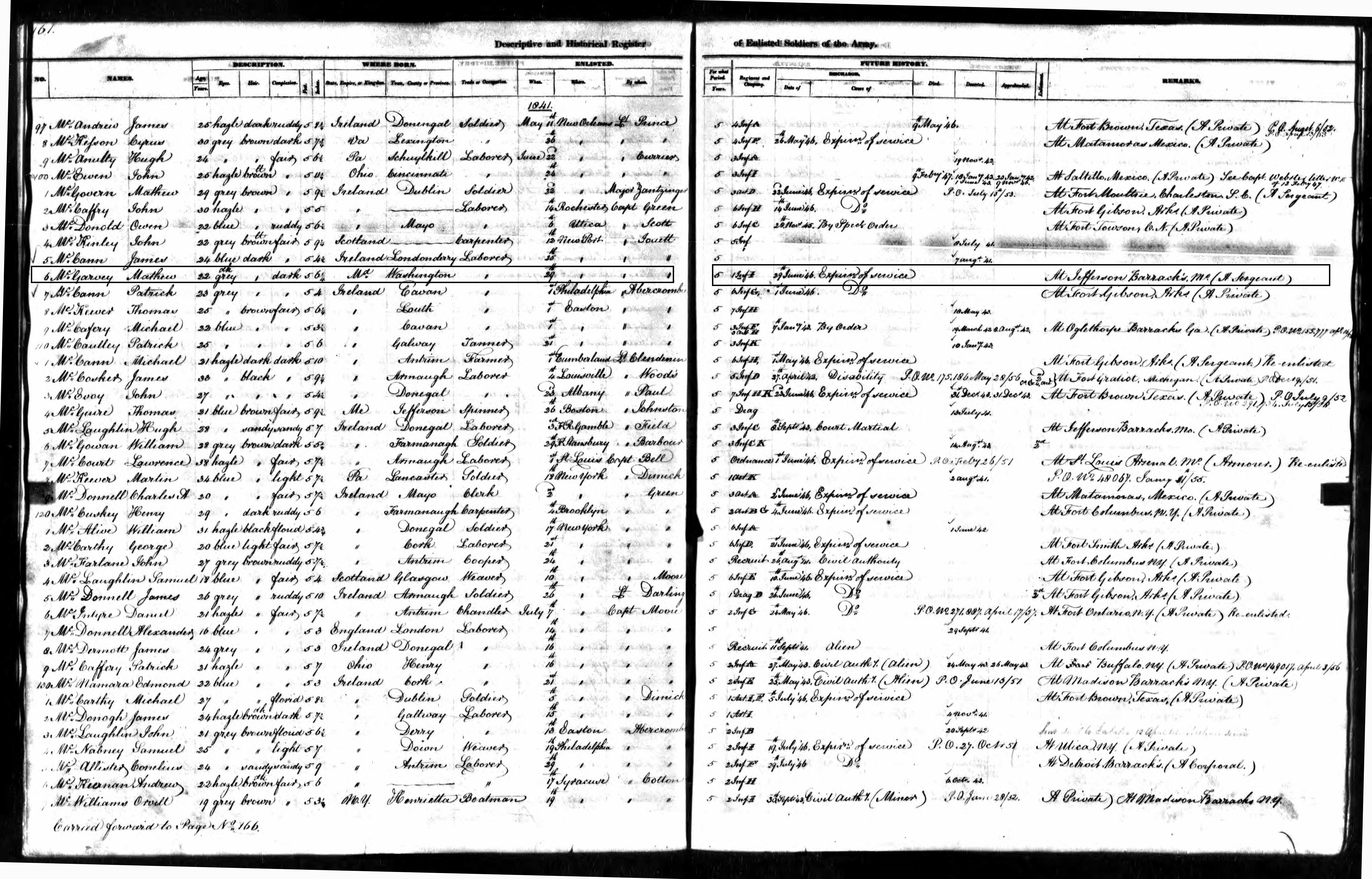
Matthew’s absence in 1840 becomes more meaningful when read beside his early Regular Army service. In 1841, he entered Company I, 1st U.S. Infantry, beginning a five-year term that ended in 1846 Army enlistment registerGraves registration card. This military service helps explain why Eunice appears as the practical head of the household during the early years of the marriage.
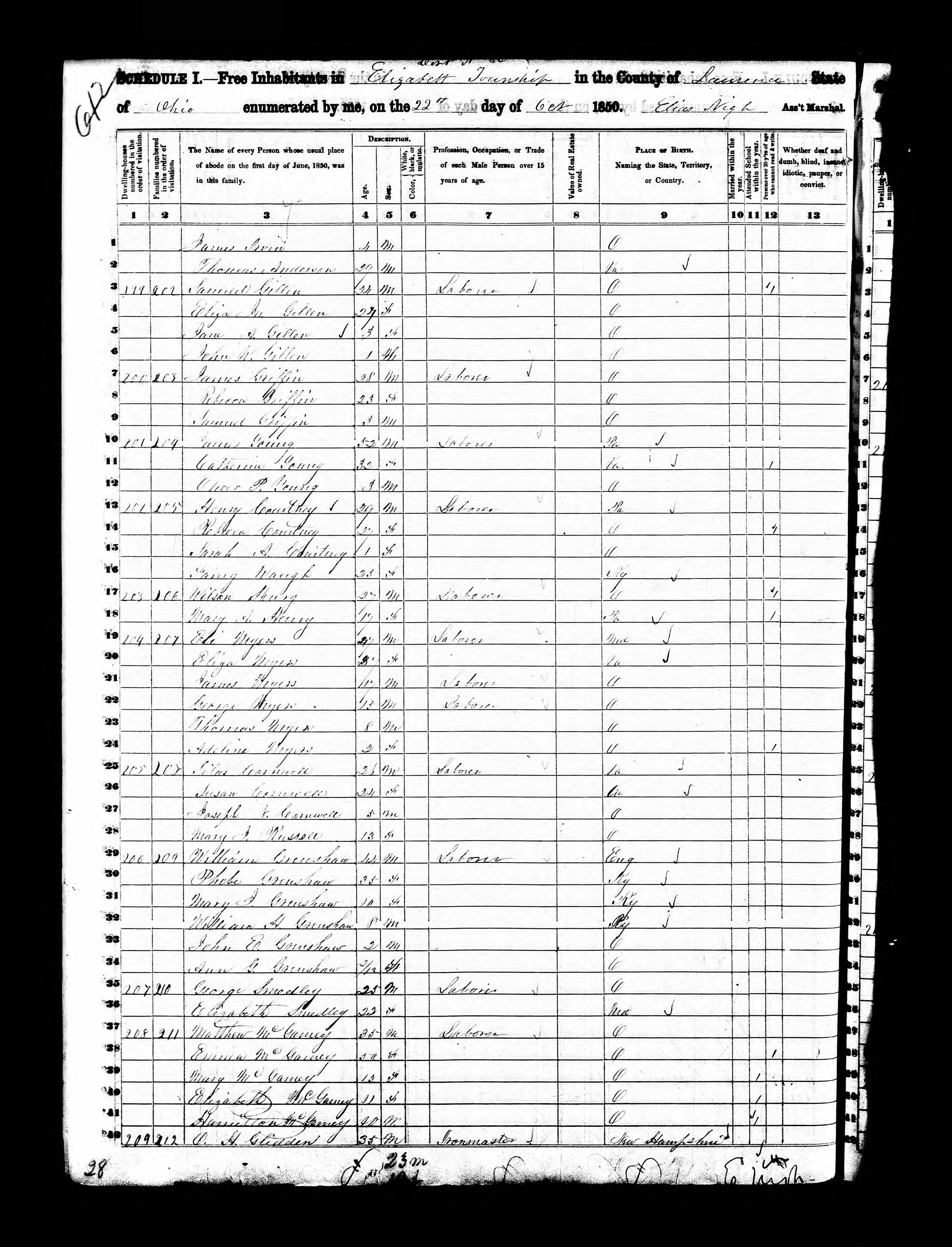
The 1850 census brings the family back into view. Matthew, Eunice, Mary, Elizabeth, and Hamilton appear together in Elizabeth Township, Lawrence County, Ohio 1850 census. The ages in that census remain difficult, especially Matthew’s reported age, but the household grouping strongly matches the known family. The record also describes Matthew as a laborer, giving one of the clearest pieces of non-military occupational evidence before the Civil War 1850 census.
Between the 1835 marriage and the outbreak of the Civil War, Matthew’s life appears to have moved between family settlement, wage labor, and military service. By the time he entered Civil War service in 1861, the family had already experienced long absences, uncertain household arrangements, and the economic instability common to working families on the Ohio frontier Soldiers’ Home register.
Section III
Early Army Service and the Mexican War Era
Matthew McGarvey’s first documented military service began in 1841, when he entered the Regular Army. The enlistment register places him in the 1st U.S. Infantry and records the personal details that make the entry important for this reconstruction: name, birthplace in Washington County, Maryland, physical description, enlistment term, and discharge at Jefferson Barracks in 1846 Army enlistment register. Later summary records identify the service more specifically as Company I, 1st U.S. Infantry, running from 1841 to 1846 Graves registration card.
Read together, the early army records create a sequence rather than a single isolated enlistment. The individual records anchor Matthew to the 1st U.S. Infantry and to Jefferson Barracks at discharge; the War Department orders place the regiment’s 1841 movement from Florida to the Upper Mississippi; the Jefferson Barracks history identifies Company I as arriving from Fort Winnebago in September 1845 and still connected to the post in December through Captain William R. Jouett. The safest interpretation is that Matthew served in the small-company world of the prewar Regular Army, likely moving through the Upper Mississippi frontier system before ending his enlistment at Jefferson Barracks Regular Army contextGeneral Orders indexJefferson Barracks, 1845William R. Jouett.
That setting matters. The Regular Army of the 1840s was small, professional, and scattered across frontier and coastal posts, with infantry companies often serving far from regimental headquarters. Army histories explain that this was not a short-term volunteer force but the standing army, organized in small companies, reduced and redistributed after frontier conflicts, and then drawn toward the Mexican War mobilization Regular Army contextArmy Infantry history. Matthew’s five-year term fits that Regular Army pattern Army enlistment register, and his service helps explain why he later appears in Civil War records as a man with prior military experience.
War Department orders give the broad movement of the regiment at the moment Matthew entered service. The 1st Infantry had recently been part of the Army’s Florida service during the Second Seminole War era, but the 1841 orders show the regiment being withdrawn from Florida and reassigned to the Upper Mississippi frontier. By the time Matthew’s service can be documented, the regiment was no longer being placed in Florida; its companies were being distributed among Fort Snelling, Fort Crawford, Fort Atkinson, and Fort Winnebago General Orders index. Those orders do not name Matthew and do not identify Company I by post. The stronger Company I link comes later, when the Jefferson Barracks source states that Company I arrived there from Fort Winnebago on September 19, 1845 Jefferson Barracks, 1845.
Jefferson Barracks is the firmest place where the unit-level evidence and Matthew’s individual records meet. Banta’s history places Company I, 1st U.S. Infantry at Jefferson Barracks in late 1845, and Matthew’s enlistment record places his discharge at Jefferson Barracks in 1846 Jefferson Barracks, 1845Army enlistment register. The source does not name Matthew individually, but the alignment of company, regiment, location, date, and Company I’s captain makes Jefferson Barracks the best-supported setting for the end of his Regular Army service William R. Jouett. It also adds a useful caution: when a 1st Infantry battalion left Jefferson Barracks for Texas in May 1846, Banta identifies the companies as C, E, G, and K, not Company I Jefferson Barracks, 1845.
The Company I evidence also gives Matthew’s final Regular Army setting a human command context. Banta identifies Captain William R. Jouett, a long-serving 1st Infantry officer, with Company I at Jefferson Barracks in December 1845. Jouett’s career stretched back to 1818, placing Matthew’s likely final station within the older Regular Army world of career officers, frontier posts, seniority disputes, and small-company garrison service William R. Jouett.
Jefferson Barracks: established 1826 near St. Louis
Matthew was still enlisted when the Mexican War opened in May 1846, but the surviving evidence points to discharge at Jefferson Barracks rather than service in Mexico Regular Army contextArmy enlistment register. Banta’s account strengthens that caution because Company I is not named among the Texas-bound companies, and the two understrength 1st Infantry companies left at Jefferson Barracks during May, June, and July 1846 are not identified by letter Jefferson Barracks, 1845. That timing places Matthew at the edge of national mobilization without proving that he crossed into the Mexican theater. His Regular Army service closed in June 1846, after a five-year term that began just after Eunice appeared as head of household in Lawrence County, Ohio 1840 census.
Interpretive Conclusion: Regular Army Service
The Regular Army evidence supports a narrow but useful conclusion. Matthew’s individual enlistment record identifies service in the 1st U.S. Infantry from 1841 to 1846, and the surrounding unit evidence explains the likely setting for that service without proving every post where he served Army enlistment registerGeneral Orders indexJefferson Barracks, 1845. It places him beside the opening of the Mexican-American War, but not inside confirmed field service in Texas or Mexico.
Interpretive conclusion: Matthew’s early army service is best understood as frontier Regular Army infantry service that ended at Jefferson Barracks just as the Mexican War was beginning, with no present evidence confirming Mexican War field service and with his reported military age remaining inconsistent with the broader record trail.
Section IV
Civil War Service
Matthew McGarvey’s Civil War record has to be read in two layers: the service cards that follow one man, and the larger regimental history moving around him. The individual file begins with a brief 1861 connection to Company E, 18th Ohio Infantry, then settles into sustained mounted service in Company A, 1st West Virginia Cavalry. A later War Department notation links those two trails, showing that federal clerks themselves treated the Ohio infantry reference and the West Virginia cavalry file as connected records for the same soldier Adjutant General notation.
By July 25, 1861, Matthew had joined Company A at Clarksburg, Virginia, for a three-year term. The descriptive book calls him a 40-year-old farmer born in Washington County, Maryland, while the detachment muster-in card records the practical equipment of cavalry service: a horse and horse equipments valued at $100 each Company descriptive bookMuster-in roll. Later cover cards preserve the surname variant “McGarry” and summarize his rank movement from private to sergeant Reference envelope.
Father and Son in West Virginia Service
A family hypothesis is that the elder Matthew McGarvey entered West Virginia service and
understated his age in order to fight near, or protect, his son Hamilton. The service files
make the family proximity worth preserving, but they also point toward a more careful
interpretation. Matthew had already begun underreporting his age in military records, and
his Civil War cards show a pattern of formal assignment, detached duty, reenlistment, and
promotion rather than a simple effort to stay beside his son.
Matthew’s move from short-term Ohio infantry service into the 1st West Virginia Cavalry
placed him in the same broad Union military world as Hamilton, who had entered Company H
of the 2nd Virginia Infantry through Ironton and Wheeling. The timing, geography, and family
relationship matter. Still, their records usually place them in different regiments, different
roles, and often different locations. The stronger conclusion is parallel West Virginia
service within the same Ohio River and mountain-war network, not father and son serving side
by side.
Comparison of Matthew and Hamilton McGarvey’s Civil War Service
Period
Matthew McGarvey
Hamilton McGarvey
Interpretation
Spring 1861
Company E, 18th Ohio Infantry.
Company H, 2nd Virginia / West Virginia Infantry.
Both entered early Union service from the Ohio and western Virginia border region.
Summer 1861
Enrolled in Company A, 1st West Virginia Cavalry at Clarksburg.
Company H was recruited at Ironton, Ohio, and mustered at Wheeling.
This is the strongest family-proximity moment, though they were not in the same regiment.
1862
Private, 1st West Virginia Cavalry.
Teamster duties with or near the 2nd West Virginia Infantry.
Both remained connected to West Virginia service, but in different roles.
1863
Promoted to corporal and placed on detached duty at Charleston and later division headquarters.
Hamilton’s regiment moved toward mounted infantry service.
Matthew may have had better access to information, but not direct authority over Hamilton.
Early 1864
Reenlisted as a veteran volunteer in the 1st West Virginia Cavalry.
Reenlisted as a veteran volunteer in the 5th West Virginia Cavalry.
Both remained in West Virginia mounted service, but still in separate regiments.
Late 1864
Served during wider cavalry operations.
Captured at New Creek on Nov. 28, 1864.
Their service overlapped broadly, but their units were not usually side by side.
1865
Hospitalized at Harewood U.S.A. General Hospital, then mustered out as sergeant.
Paroled through Camp Chase and discharged June 8, 1865.
Both survived the war, but Hamilton’s capture separated their wartime paths sharply.
Interpretive conclusion: The strongest evidence supports parallel service
within the same Ohio River and West Virginia Unionist military world, not father and son
service side by side. Matthew’s headquarters duty may have helped him hear news about
West Virginia units, but the evidence supports possible awareness and proximity more than
direct protection.
Through late 1861 and 1862, Matthew appears on Company A rolls as a private, present with the mounted company during the early phase when the regiment was still often styled as the 1st Virginia Cavalry before West Virginia statehood changed the official designation October 1861 rollJanuary-February 1862 rollJuly-August 1862 roll. By the November-December 1862 roll, the first clear detached-service note appears, and by January-February 1863 he is listed as a corporal, absent on detached service November-December 1862 rollJanuary-February 1863 roll.
That detached-duty thread is the key to reading Matthew’s war honestly. A special muster roll places him at Charleston in April 1863, and later rolls carry him at division headquarters, with the September-October card specifying detached service from April 1, 1863 April 1863 special rollJuly-August 1863 rollSeptember-October 1863 roll. This matters because the 1st West Virginia Cavalry’s regimental history includes the Gettysburg Campaign, including fighting at Hanover, Farnsworth’s Charge at Gettysburg, and the pursuit of Lee’s army through Monterey Pass. Matthew belonged to that regiment, but his own cards place him in a headquarters/support assignment during the Gettysburg period rather than proving that he personally rode in the charge.
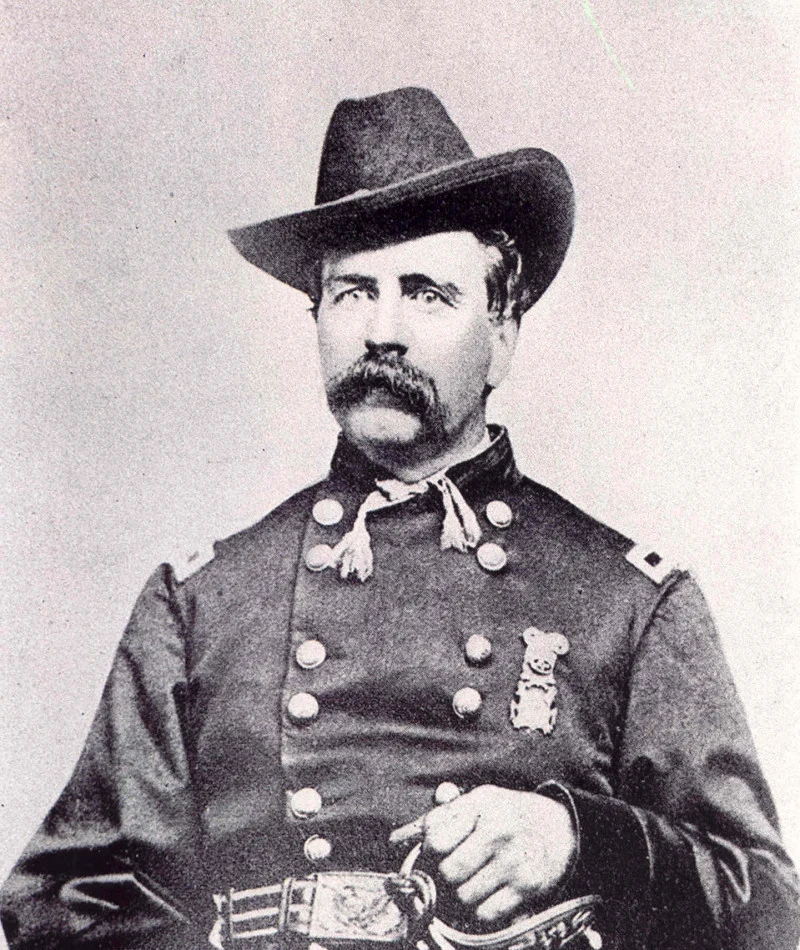
Charles E. Capehart and Henry Capehart, brothers whose service helps frame the later reputation of the 1st West Virginia Cavalry. Charles was associated with the regiment’s Gettysburg and Monterey Pass service; Henry rose from surgeon to colonel and brigade commander, later leading what became known as Capehart’s Fighting Brigade Charles Capehart photoHenry Capehart photo.
At the start of 1864, Matthew is back on the company roll as present, still a corporal January-February 1864 roll. On February 14, 1864, at Charleston, he reenlisted as a veteran volunteer, again giving his age as 40 and signing into a renewed term in Company A Recruitment papers. The March veteran-volunteer roll at Wheeling confirms the reenlistment paperwork and ties it to General Orders No. 191 Veteran volunteer roll.
Historical Interpretation: Civil War Age
The repeated age of 40 is one of the clearest signs that Matthew’s Civil War age should be read cautiously. He was called 40 when he entered Company A in 1861, and he gave the same age when he reenlisted as a veteran volunteer in 1864, even though three years had passed Company descriptive bookRecruitment papers. That repetition suggests a carried-forward or deliberately understated military age, not a reliable birth calculation. It also fits the larger record pattern in which Matthew’s military papers make him younger than the civilian records before and after the war.
The larger regiment moved into one of its most active periods during 1864. The 1st West Virginia Cavalry operated in the western Virginia and Shenandoah Valley campaigns associated with Hunter, Averell, Sheridan, and the cavalry war against Jubal Early. Its wider service touched the same world as Hamilton’s later mounted regiment: western Virginia roads, railroad defense, Valley campaigning, and the kind of mobile warfare that culminated for Hamilton in his capture at New Creek on November 28, 1864. Matthew’s cards do not place him at New Creek, but they do show that by September and October 1864 he was a sergeant, present with Company A and marked as a veteran September 1864 muster-out rollSeptember-October 1864 rollNovember-December 1864 roll.
In 1865, the regiment’s history widened again into the final Union cavalry drive: Waynesboro, Dinwiddie Court House, Five Forks, Sailor’s Creek, Appomattox Station, and Appomattox Court House. By then Henry Capehart’s command had become part of Custer’s cavalry division and had earned the reputation remembered in the document gallery as Capehart’s Fighting Brigade Henry Capehart photo. Matthew’s individual trail narrows at exactly this dramatic moment. Hospital muster rolls place him at Harewood U.S.A. General Hospital in Washington, D.C., attached to the hospital on April 30, 1865, and still present there on the June 30 roll April 1865 hospital rollJune 1865 hospital rollHarewood image.
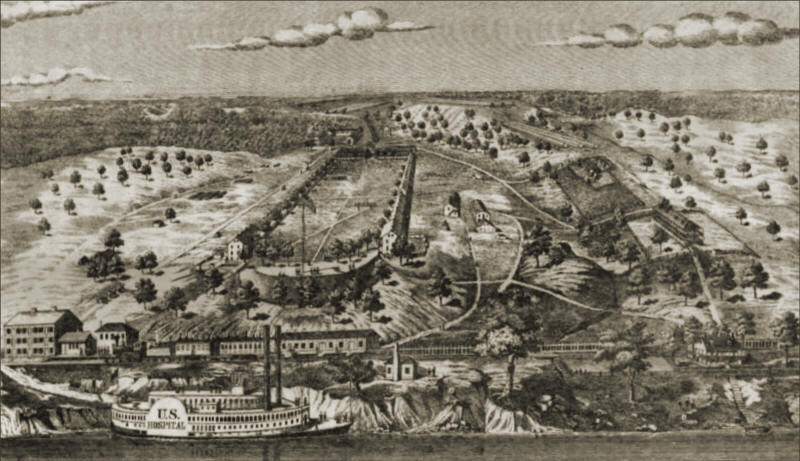
Harewood U.S.A. General Hospital, Washington, D.C.
His closing cards preserve both achievement and ambiguity. The July 8 company muster-out roll lists him as a sergeant, a veteran, and “In Hospital,” and notes that he had been appointed from private on February 14, 1864 Company muster-out roll. The individual muster-out card and the published West Virginia adjutant general report both confirm the final accounting at Wheeling in July 1865, while the compiled roster preserves the simple summary: Matthew McGarvey, Company A, 1st West Virginia Cavalry, sergeant Individual muster-out rollAdjutant general reportCompany A roster. His war therefore stretched from the opening months of Union mobilization through the end of the conflict, but the safest narrative keeps two truths together: he served in one of West Virginia’s hard-riding cavalry regiments, and his own muster cards often place him in detached, headquarters, veteran, and hospital roles rather than at every battlefield named in the regiment’s history.
Section V
Decline, Care, and Burial
Matthew McGarvey grave, Dayton National Cemetery, Section F, Row 15, Site 17.
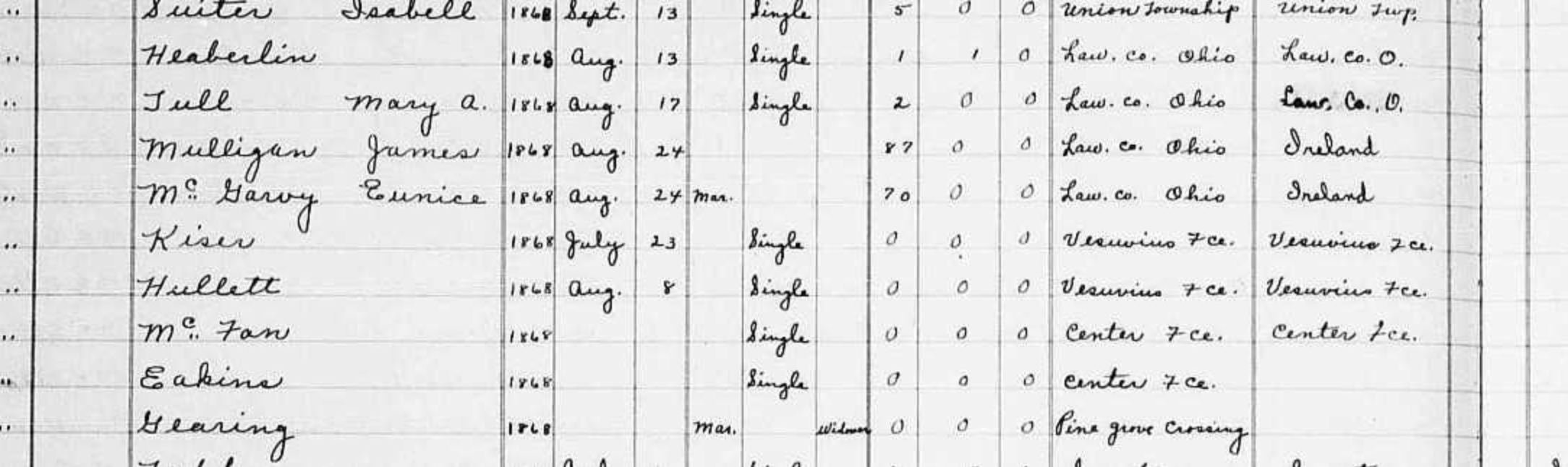
Eunice Grimes McGarvey died in Lawrence County, Ohio, on August 24, 1868. Her death record identifies her as married, born in Ireland, and age 70, which helps clarify her approximate birth year and shows that Matthew was widowed before his later move into Kentucky records Eunice death record.
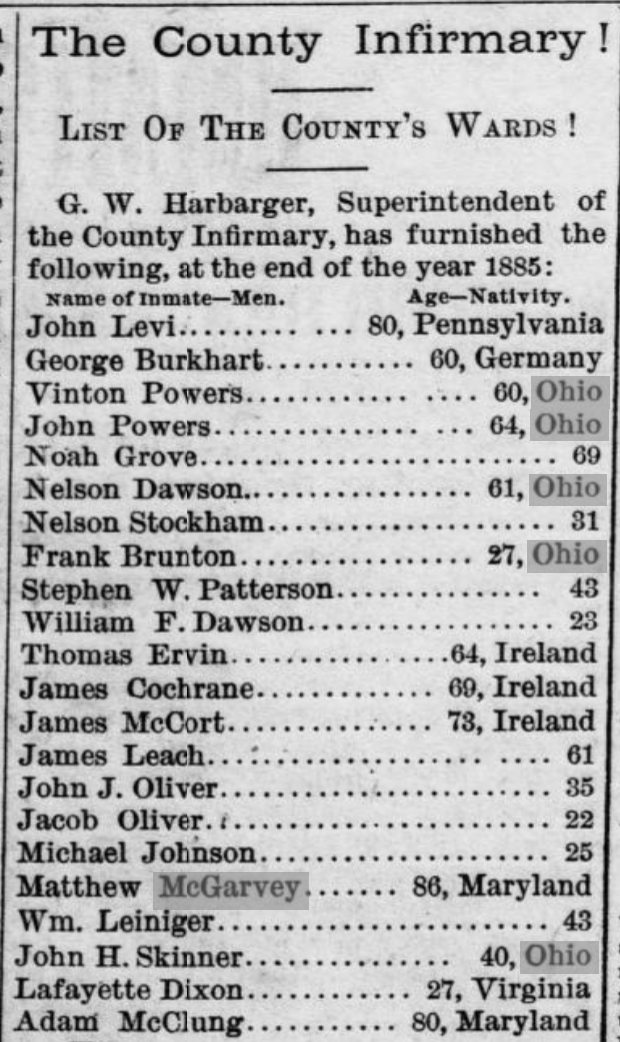
After the war, Matthew McGarvey remained visible in civilian records before his health and circumstances declined. The 1870 census shows him in Estill County, Kentucky, with real estate and personal property, while later records place him in institutional care. A January 1886 newspaper notice places him in the county infirmary at the close of 1885 and identifies him as age 86 and born in Maryland
1870 censusJackson Standard, Jan. 7, 1886.
His final records suggest worsening health rather than a single sudden event. The hospital register lists catarrh, while the Soldiers’ Home record connects him to rheumatism and later senile dementia
Naval Hospital RegisterSoldiers’ Home Register.
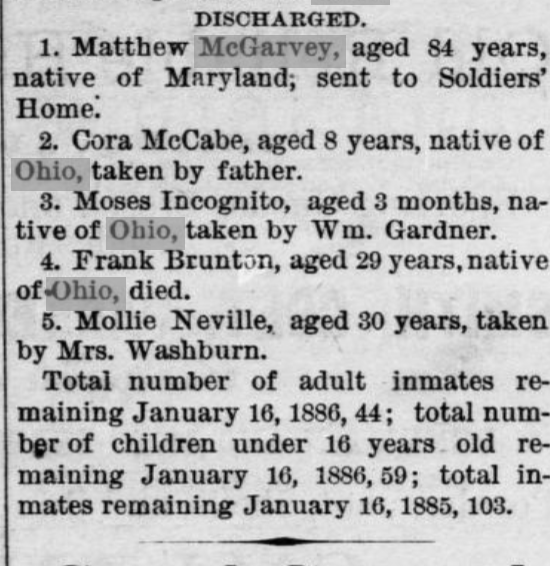
The January 21, 1886 newspaper notice reports that Matthew was discharged from the county infirmary and sent to the Soldiers’ Home. This helps connect the local poor-relief record to the federal veterans’ care system
Jackson Standard, Jan. 21, 1886.
Matthew died on July 7, 1887, and was buried at Dayton National Cemetery. His burial records and grave marker identify him with Company E, 18th Ohio Infantry, preserving the Ohio regiment identity that appears in his late-life records even though his main Civil War muster-roll evidence centers on Company A, 1st West Virginia Cavalry
Graves registration cardVeterans Gravesite IndexGovernment headstone.
Section VI
The Problem of Age
Matthew’s age remains one of the central interpretive puzzles of the site, but Eunice’s age now appears more consistent than first assumed. Her 1868 death record reports her age as 70, implying a birth year around 1798. That makes the difficult 1850 census reading, which appears to place Eunice at about 50, much more plausible. The stronger age conflict is Matthew’s, especially in his military records and the 1850 census, where he appears much younger than his 1830 census category, 1835 marriage, and later end-of-life records allow.
The balance of evidence suggests that Matthew was probably born around 1802, while several military and mid-century records understated or misrecorded his age. Eunice, by contrast, may have been accurately reported in 1850 if she was born in Ireland around 1798.
Browse Matthew McGarvey’s surviving Civil War muster and service records by year. Select a record from the list to load its image, details, transcript, and interpretation.
Section VIII
Document Gallery
Grave Photograph
Government Headstone for Matthew McGarvey
Company E, 18th Ohio Infantry
The surviving grave photograph shows that Matthew McGarvey’s government marker was carved with the designation Company E, 18th Ohio Infantry.
Government headstone for Matthew McGarvey identifying him with Company E, 18th Ohio Infantry.
Interpretation
This photograph is the clearest visual evidence for how Matthew McGarvey was memorialized in death. Whatever uncertainty remains in the wartime service record, the stone itself shows that the final federal marker identified him with Company E, 18th Ohio Infantry.
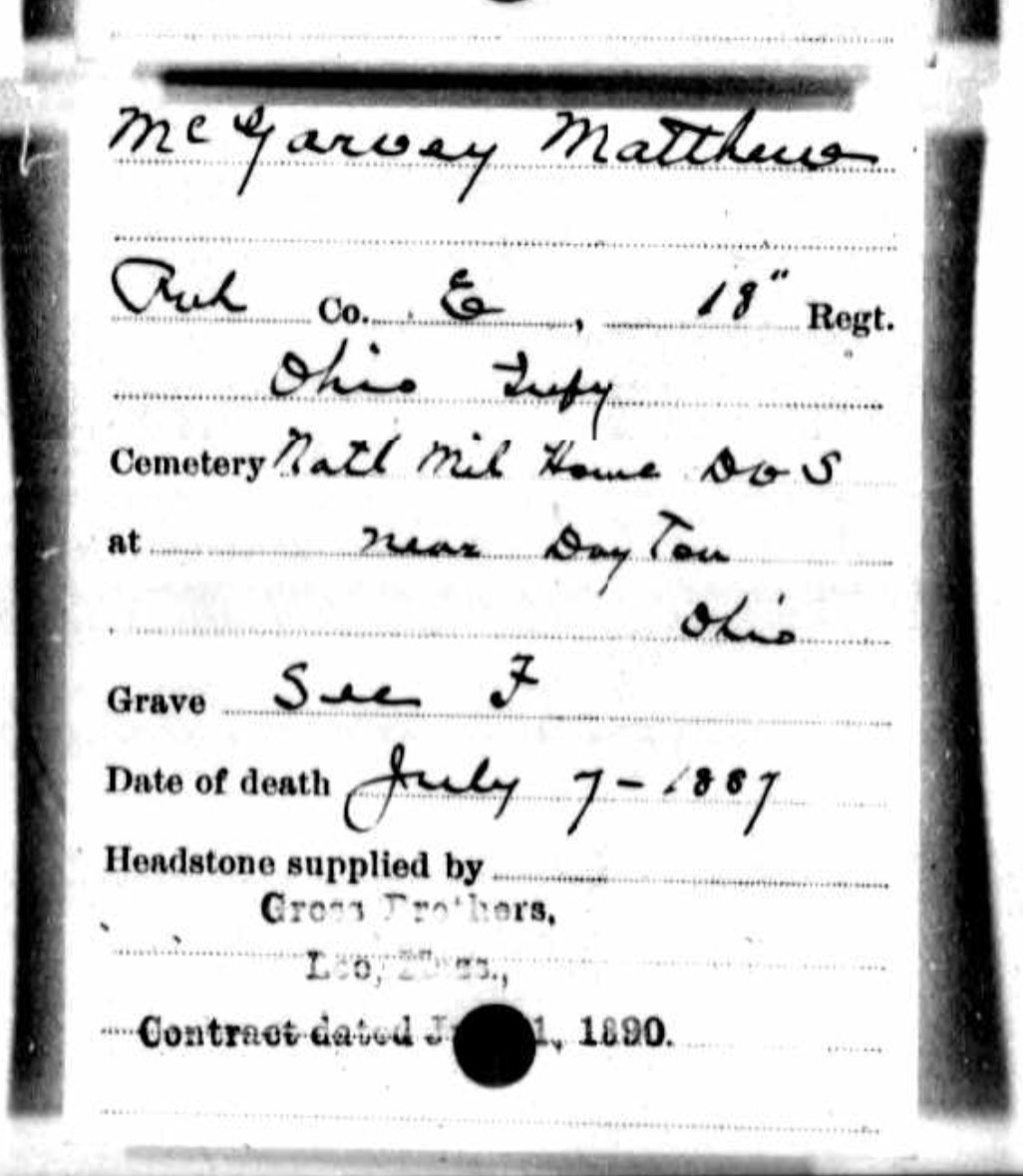
Headstone Card
Headstone Supply Card for Matthew McGarvey
National Military Home Cemetery, near Dayton, Ohio
This headstone supply card ties Matthew McGarvey’s grave directly to the federal headstone process and identifies him with Company E, 18th Ohio Infantry.
Name: McGarvey, Matthew Company and Regiment: Co. E, 18th Regt., Ohio Infy. Cemetery: Nat’l Mil Home, near Dayton, Ohio Grave: Sec. 7 Date of death: July 7, 1887 Headstone supplied by: Green Brothers, Dayton, Ohio Contract: dated February 1890
Interpretation
This card is important because it shows that the Ohio regiment identity was used not only in burial records but also in the official process that produced the government headstone.
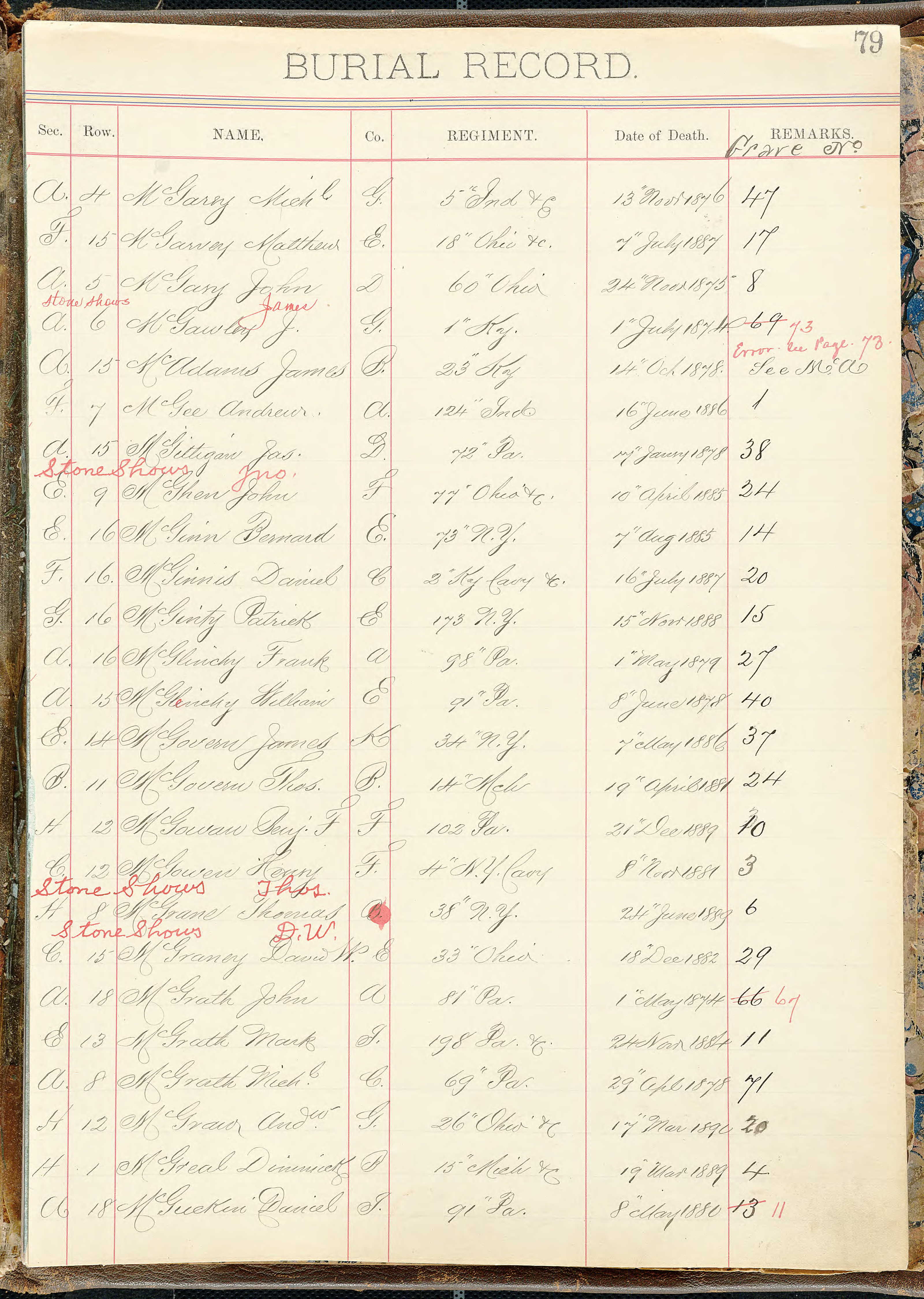
Burial Ledger
Burial Record Entry for Matthew McGarvey
Date of death, 7 July 1887
The burial ledger records Matthew McGarvey under Company E, 18th Ohio Infantry and preserves one of the clearest cemetery entries for his death and burial.
Name: McGarvey, Matthew Company: E Regiment: 18th Ohio Inf. Date of death: 7 July 1887
Interpretation
This burial ledger is one of the strongest pieces of evidence showing that the Ohio designation had become the accepted cemetery identity for Matthew by the time of his death.
Graves Registration Card
Graves Registration Card for Matthew McGarvey
Soldiers’ Home Cemetery, Dayton, Ohio
This two-page graves registration card records Matthew McGarvey’s burial, death information, next of kin, and a fuller service summary including his Mexican War era service and Civil War service.
Page 1 Name: McGarvey, Matthew County: Montgomery Address: Jackson, Ohio Date of death: July 7, 1887 Place of death: Soldiers Home Cause of death: Senile Dementia Date of burial: July 7, 1887 Date of birth: 1802 Place of birth: Washington Co., Va. [likely intended as Washington County, Maryland or a clerical error] Name of cemetery: Soldiers Home Location: Dayton, Ohio Lot no.: Row 15 Section no.: -- Block no.: H Grave no.: 17 Marker: Upright, X Next of kin: Son: Hamilton McGarvey, Remple, Ohio
Service Record War served in: Civil and Mexican Date enlisted: Apr. 1861 Date discharged: Aug. 6, 1861 Branch of service: Infantry Rank: Private Company, outfit, or ship: Company E, 18th Ohio Infantry Marker: Company E, 18th Ohio Infantry [over]
Page 2 June 6, 1841: Company I, 1st U.S. Infantry June 6, 1846: Discharge date for Company I, 1st U.S. Infantry service
August 6, 1861: Company A, 1st West Virginia Cavalry March 4, 1864: End date or discharge/re-enlistment point for this service period
February 14, 1864: Company A, 1st West Virginia Cavalry Rank: Sergeant July 8, 1865: Final discharge date
Note: Continuous service 1861 to 1865.
Interpretation
This two-page card is one of the strongest summary records for Matthew McGarvey’s military and burial identity. Page 1 anchors his death at the Soldiers’ Home on July 7, 1887, gives the cause of death as senile dementia, places his burial at the Soldiers’ Home cemetery in Dayton, Ohio, and names his son Hamilton McGarvey of Remple, Ohio, as next of kin.
Page 2 is especially important because it clarifies the confusing company-letter problem in Matthew’s early military service. It identifies his 1841 to 1846 service as Company I, 1st U.S. Infantry, confirming that the difficult company letter in the earlier military return was likely “I.” The card then separates that earlier service from his Civil War service, listing Company A, 1st West Virginia Cavalry, including his later rank as sergeant and final discharge on July 8, 1865.
The card also helps explain why Matthew’s grave and burial records identify him with Company E, 18th Ohio Infantry. The front of the card preserves the Ohio infantry identity used for the marker, while the reverse shows a more complete military history that includes regular army service, West Virginia cavalry service, and continuous Civil War service from 1861 to 1865.
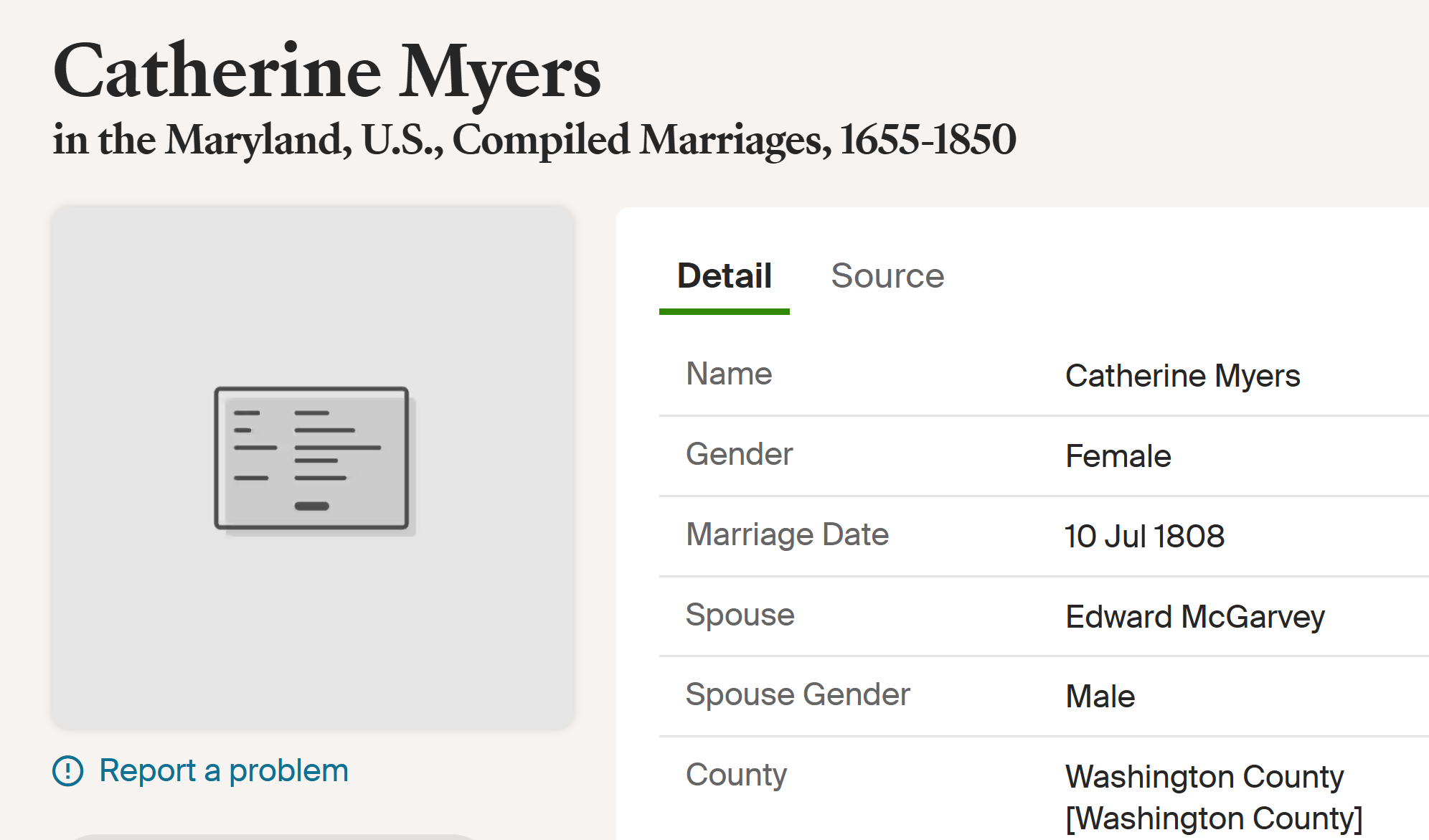
Compiled Marriage Index
1808 Marriage Record for Catherine Myers and Edward McGarvey
Washington County, Maryland
This compiled Maryland marriage entry records Catherine Myers marrying Edward McGarvey in Washington County, Maryland, on 10 July 1808.
Database title: Maryland, U.S., Compiled Marriages, 1655-1850 Name: Catherine Myers Gender: Female Marriage date: 10 July 1808 Spouse: Edward McGarvey Spouse gender: Male County: Washington County, Maryland Source information: Ancestry.com. Maryland, U.S., Compiled Marriages, 1655-1850 [database on-line]. Provo, Utah: Ancestry.com Operations Inc., 2004. Original data: Jordan Dodd, Liahona Research, comp., Maryland Marriages, 1655-1850.
Interpretation
This record matters because it places an Edward McGarvey in Washington County, Maryland, in 1808, the same county later named in Matthew McGarvey's strongest birthplace evidence. It is also interesting beside the 1840 Elizabeth Township census page, where an Edward McGarvey appears near Eunice McGarvey and Hamilton Grimes. Those circumstances make Edward worth tracking as a possible research lead.
At present, however, there is no direct evidence that this Edward McGarvey was related to Matthew McGarvey. The marriage entry does not name parents, children, witnesses, or any connection to Matthew, and it should be treated as contextual/circumstantial evidence only until supported by additional records.
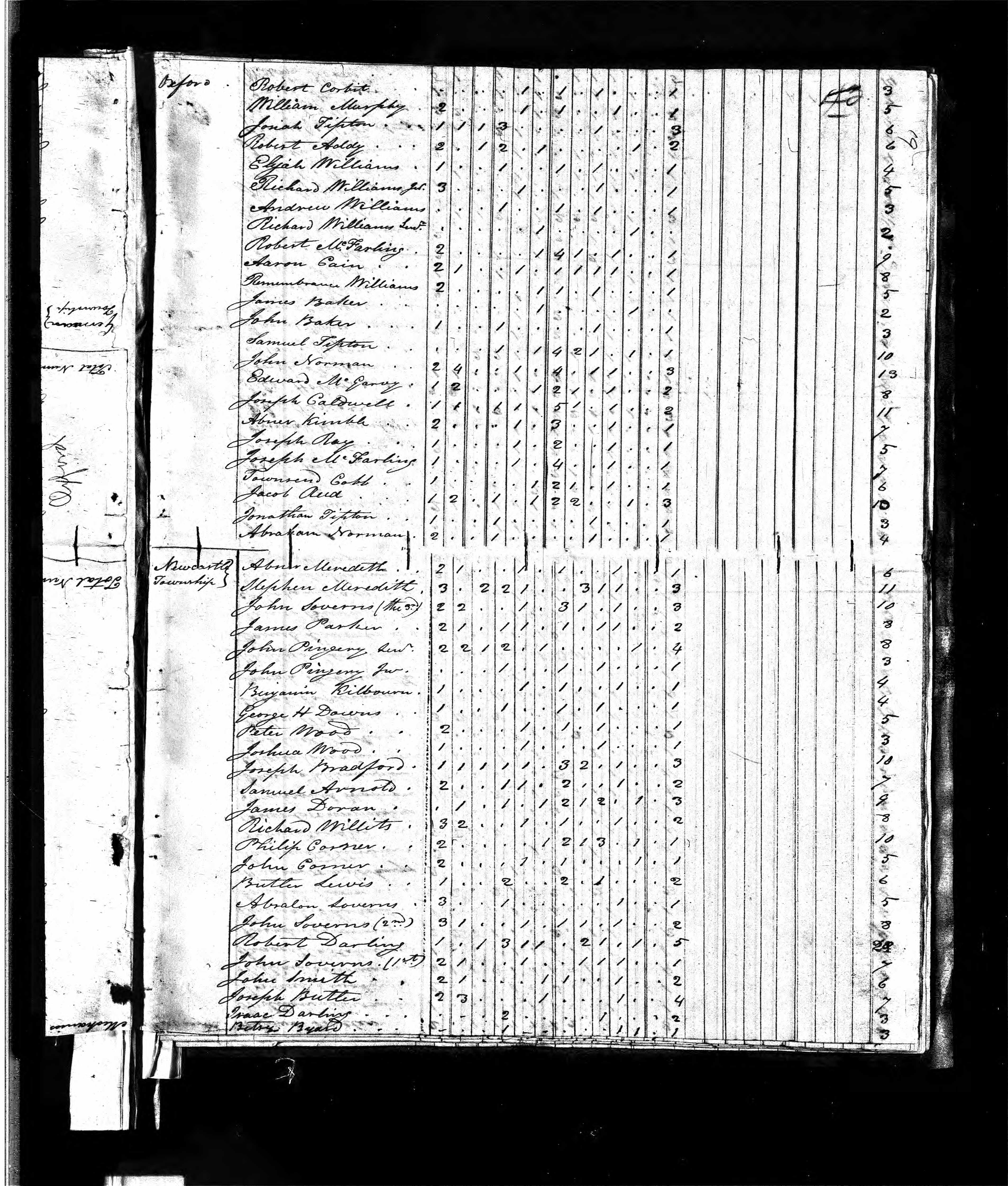
Federal Census
1820 Census Entry for Edward McGarry or McGarvey
Belfast Township, Bedford County, Pennsylvania
This 1820 federal census page appears to list Edward McGarry, or a similar McGarvey spelling, in a large Pennsylvania household along a plausible westward migration route from Maryland.
Location: Belfast Township, Bedford County, Pennsylvania Head of household: Edward McGarry [possibly McGarvey] Record type: 1820 federal census, aggregate household schedule Total persons: 13 [as shown in the total column] Note: The image is an aggregate pre-1850 census schedule. Individual household members other than the named head of household are not listed by name.
Interpretation
This entry is useful because it may show Edward McGarvey, or a closely related surname form, outside Maryland before the later Ohio records. If this is the same Edward who married Catherine Myers in Washington County, Maryland, in 1808, the household's size is compatible with a family containing children born in the 1810s and early 1820s.
The record remains uncertain. The surname appears closer to McGarry than McGarvey, the household members are not named, and the entry alone does not prove any relationship to Matthew McGarvey. It should be used as a migration and household-size clue rather than as direct kinship evidence.
Federal Census
1850 Census Entry for Edward and Catherine McGarvey
Belmont County, Ohio
This 1850 federal census entry appears to list Edward McGarvey, age 78 and born in Ireland, with Catherine McGarvey, age 68 and born in Maryland, in Belmont County, Ohio.
Location: Belmont County, Ohio Household: Edward McGarvey Edward McGarvey: age 78, male, born Ireland Catherine McGarvey: age 68, female, born Maryland Enumeration date: 10 October 1850
Interpretation
This is the strongest later record for the Edward-and-Catherine research lead. Edward's reported age points to a birth around 1772, matching the older Edward McGarvey candidate, and his Irish birthplace would place him in the immigrant generation before Matthew. Catherine's Maryland birthplace is also compatible with the 1808 Washington County marriage record.
The entry still does not prove a relationship to Matthew McGarvey. It supports a plausible older McGarvey couple who moved from the Maryland/Pennsylvania world toward Ohio, but it does not name Matthew, Eunice, Hamilton, or any other known member of Matthew's household.
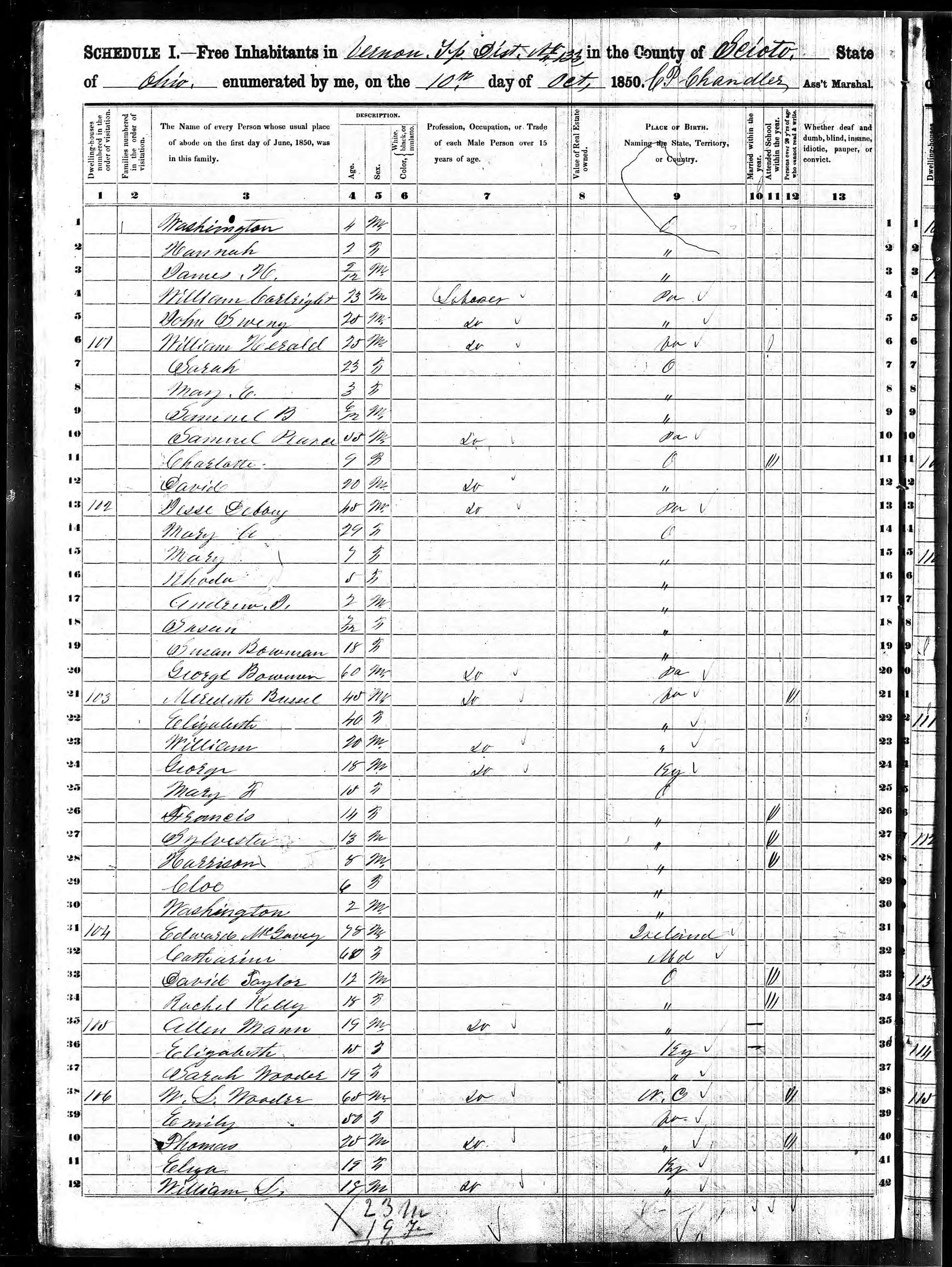
Federal Census
1860 Census Entry for Catherine McGarvey near the Littlejohn Household
Vernon Township, Scioto County, Ohio
This 1860 census page lists Catherine McGarvey in Vernon Township, Scioto County, Ohio, near Margaret Littlejohn, supporting a possible link to Edward and Catherine's daughter Margaret, who married into the Littlejohn family.
Location: Vernon Township, Scioto County, Ohio Post office: Iron Furnace Enumeration date: 1 August 1860 Margaret Littlejohn household: Margaret Littlejohn, age 45, female, born Pennsylvania; William Littlejohn, age 21, male, furnace laborer, born Ohio; Catherine Littlejohn, age 18, female, born Ohio; George W. Littlejohn, age 14, male, born Ohio; Robert Littlejohn, age 11, male, born Ohio Catherine McGarvey: age 76, female, born Pennsylvania
Interpretation
This record is useful because Catherine McGarvey appears immediately after the Littlejohn household, and Margaret Littlejohn is a plausible match for Edward and Catherine's daughter Margaret. If that identification is correct, Catherine may have been living near or with her married daughter after Edward's death. Because Edward appears with Catherine in 1850 but not in this 1860 household, the record provides circumstantial evidence that he likely died between 1850 and 1860.
The entry should still be treated cautiously. Catherine's birthplace is recorded as Pennsylvania here, while the 1850 Edward-and-Catherine census records Catherine as born in Maryland. The record supports a possible later-life trail for Catherine Myers McGarvey, but it does not independently prove her relationship to Matthew McGarvey.
Federal Census
1830 Census Entry for Mathew McGarvey
Elizabeth Township, Lawrence County, Ohio
This 1830 federal census entry appears to record Mathew McGarvey, or a very close surname variant, in Elizabeth Township, Lawrence County, Ohio, placing him in the county several years before his documented 1835 marriage to Eunice Grimes.
Location: Elizabeth Township, Lawrence County, Ohio Head of household: Mathew McGarvey [or McGarvy] Enumerated household:
Males age 20 to 30: 1 Note: The marked image makes the name and the single tally in the 20 to 30 male column much clearer. No additional household members are clearly marked on the boxed line.
Interpretation
This is an important early-life record because it appears to place Mathew McGarvey in Lawrence County, Ohio, about five years before his documented 1835 marriage there. It may also be the earliest surviving evidence that places him in Ohio rather than Maryland, showing that he was already living in Lawrence County before his marriage and before the fuller later record trail begins. The entry therefore strengthens the case that the McGarvey surname was already present in Lawrence County by 1830 under a spelling very close to the later family form.
Newspaper Notice
1885 County Infirmary List Naming Matthew McGarvey
Published 7 January 1886
This newspaper notice lists Matthew McGarvey among the male inmates of the county infirmary at the end of 1885 and identifies him as age 86, born in Maryland.
Title: “The County Infirmary! List Of The County’s Wards!” Context: G. W. Harbarger, Superintendent of the County Infirmary, furnished the following at the end of the year 1885. Entry: Matthew McGarvey, 86, Maryland
Interpretation
This is an important later-life record because it places Matthew McGarvey in institutional care at the end of 1885, just before his 1886 admission to the National Home for Disabled Volunteer Soldiers. It is also valuable because it identifies him as age 86 and born in Maryland, two details that fit the broader late-life evidence better than the much younger ages reported in his military records.
Newspaper Notice
1886 County Infirmary Discharge Notice
Jackson Standard, January 21, 1886
This newspaper notice reports that Matthew McGarvey, age 84 and a native of Maryland, was discharged from the county infirmary and sent to the Soldiers’ Home.
Discharged:
1. Matthew McGarvey, aged 84 years, native of Maryland; sent to Soldiers’ Home.
Interpretation
This notice is important because it directly connects Matthew’s stay at the county infirmary to his transfer to the Soldiers’ Home in early 1886. It also repeats two key late-life identity details: his Maryland nativity and an age consistent with a birth around 1802.
Military Record
1846 Military Discharge Record
Regimental return, June 1846
This regimental return appears to list Matthew McGarvey among enlisted men discharged in June 1846, making it an important possible pre-Civil War military-service clue.
Record type: Regimental return / discharge list Section: Names of enlisted men requiring explanation since last return Subheading: Discharged, expiration of service Name: Matthew McGarvey Rank: Sergeant Company: Company I [uncertain reading] Date: 29 June 1846 Nearby entries: Roger Riley, private, Company C, 15 June 1846; David Swinson, private, Company C, 21 June 1846; Lemuel Haggerty, private, Company F, 17 June 1846; John Key, private, Company D, 28 June 1846; Cornelius White, private, Company K, 6 June 1846. Note: The company letter next to Matthew appears most likely to be “I,” but the handwriting is difficult and should be treated as uncertain. The entry appears in the discharge section under “expiration of service.”
Interpretation
This record is important because it may place Matthew McGarvey in regular military service before the Civil War. The entry appears in a formal regimental return, not simply a later compiled note, and it lists him as a sergeant discharged on 29 June 1846 for expiration of service. The company letter is not fully certain, but the best reading is Company I because it does not match the clearer D, F, or K forms visible elsewhere on the same page. If this identification is correct, it helps explain why Matthew later appears in Civil War records with a rapid rank progression and strengthens the possibility that he had prior military experience before joining the West Virginia cavalry.
Adjutant General’s Report
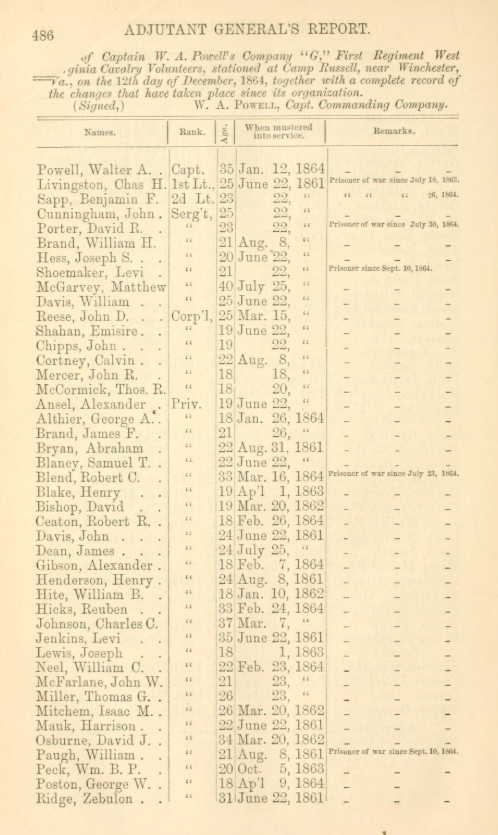
1865 West Virginia Adjutant General Report
Company A, 1st Regiment West Virginia Cavalry
This published adjutant general report lists Matthew McGarvey in Company A, 1st Regiment West Virginia Cavalry, with a mustering-out date of 10 July 1865.
Source heading: Adjutant General’s Report, p. 486 Unit heading: W. A. Powell, Capt. Commanding Company Context: “Of Captain W. A. Powell’s Company ‘G,’ First Regiment West Virginia Cavalry Volunteers, stationed at Camp Russell, near Winchester, Va., on the 12th day of December, 1864, together with a complete record of the changes that have taken place since its organization.” Table columns: Name; Rank; Age; When mustered into service; Remarks Entry: McGarvey, Matthew; rank not stated in visible entry; age 40; mustered out July 10, 1865. Nearby entry: Davis, William, age 25, mustered out June 20, 1865. Note: The visible unit heading refers to W. A. Powell’s company and the table continues the company roster. Matthew’s entry appears in the list with other soldiers from Company A / First Regiment West Virginia Cavalry.
Interpretation
This published report is useful because it provides an official postwar summary of Matthew McGarvey’s service in the 1st West Virginia Cavalry. It repeats the age of 40 found in several of his Civil War service cards and gives a mustering-out date of 10 July 1865, which should be compared with the individual muster-out cards that place his final accounting at Wheeling in July 1865. The report is especially valuable as a published state-level source that confirms Matthew’s association with the West Virginia cavalry outside the compiled service-card file.
Federal Census
1850 Census Entry for Matthew McGarvey
Elizabeth Township, Lawrence County, Ohio
This 1850 federal census entry records Matthew McGarvey with Eunice and children Mary, Elizabeth, and Hamilton in Elizabeth Township, Lawrence County, Ohio.
Location: Elizabeth Township, Lawrence County, Ohio Date enumerated: 22 October 1850 Household:
Matthew McGarvey, age 35, male, laborer, born Ohio
Eunice McGarvey, age 50 [uncertain], female, born Ohio
Mary McGarvey, age 13, female, born Ohio
Elizabeth McGarvey, age 11, female, born Ohio
Hamilton McGarvey, age 10, male, born Ohio Note: Matthew’s age appears to read 35. Eunice’s age is difficult to read and may appear as 50, but this should be treated cautiously.
Interpretation
The 1868 death record for Eunice McGarvey reports her age as 70, implying a birth year around 1798. That makes the difficult 1850 census age, which appears to read about 50, much more plausible than first assumed. Instead of treating Eunice’s 1850 age as the main problem, the stronger conflict may be Matthew’s reported age of about 35, which remains too young when compared with the 1830 census, his marriage in 1835, and later end-of-life records pointing toward a birth around 1802.
Pension Record
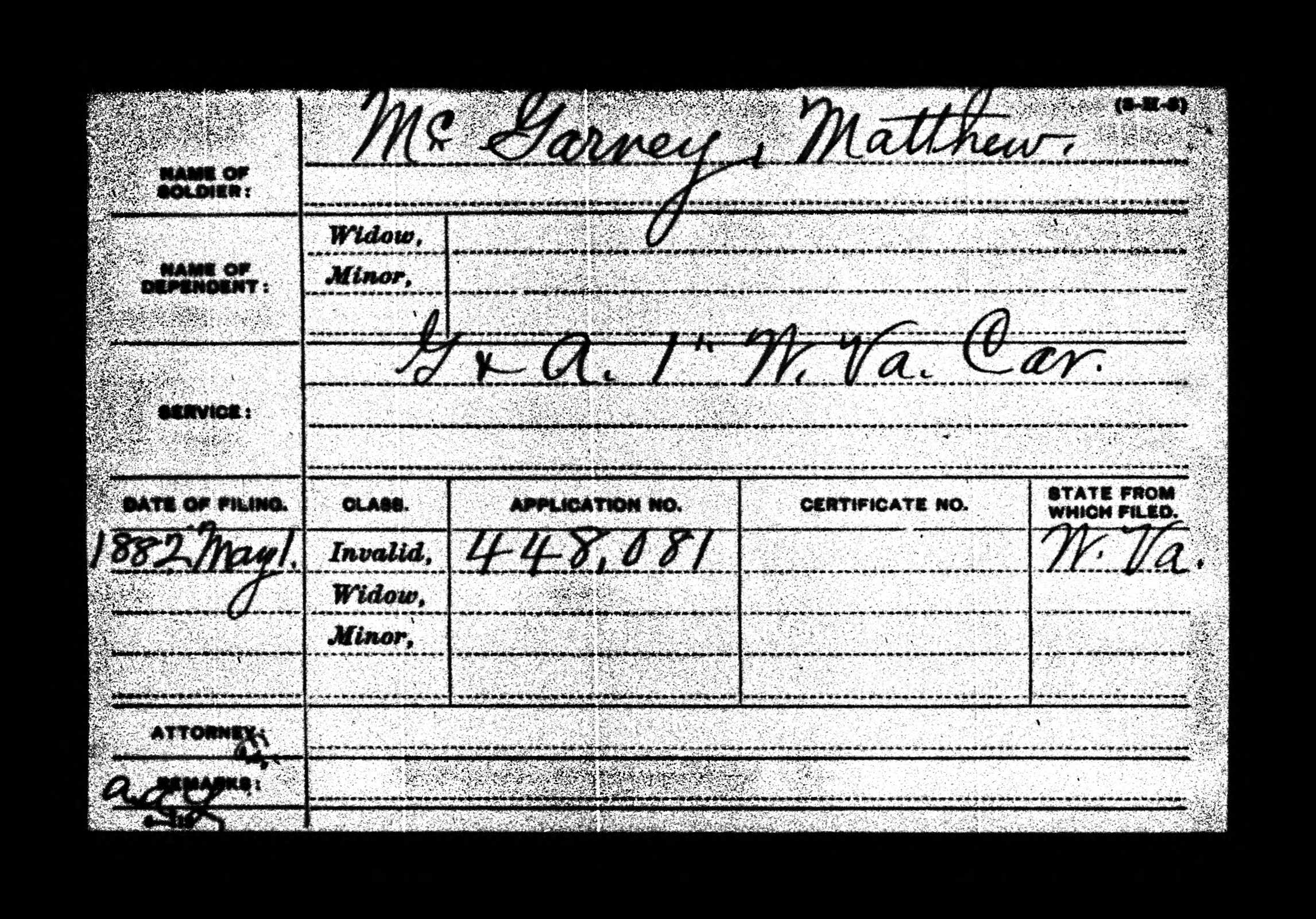
1882 Invalid Pension Index Card
Company A, 1st West Virginia Cavalry
This pension index card records Matthew McGarvey’s invalid pension application, filed from West Virginia in May 1882, and identifies his service as Company A, 1st West Virginia Cavalry.
Name: McGarvey, Matthew Service: A, 1st W. Va. Cav. Date of filing: May 1882 Class: Invalid Application no.: 448,081 Certificate no.: Not shown State from which filed: W. Va.
Interpretation
This pension index card is important because it shows that Matthew McGarvey filed an invalid pension claim in 1882, several years before his death. It also reinforces his documented Civil War service in Company A, 1st West Virginia Cavalry. Because no certificate number appears on the card, the record may indicate that the application was filed but not necessarily approved, making the full pension file an important follow-up source.
Regular Army Register
1841 Enlistment and 1846 Discharge Register
Washington County, Maryland, to Jefferson Barracks, Missouri
This Regular Army register records Matthew McGarvey’s 1841 enlistment, physical description, birthplace, and 1846 discharge at Jefferson Barracks, Missouri.
Name: Matthew McGarvey Age at enlistment: 22 Physical description: Dark eyes, dark hair, dark complexion, 5 ft 6 in Birthplace: Washington County, Maryland Occupation: Laborer Enlisted: May 4, 1841, at Washington City by Lt. Rucker Discharged: May 4, 1846, expiration of service Location at discharge: Jefferson Barracks, Missouri
Interpretation
This is one of the strongest pre-Civil War records for Matthew McGarvey because it connects his identity, birthplace, physical description, enlistment, and discharge in a single military register. The birthplace entry is especially important because it identifies him as born in Washington County, Maryland, supporting the later records that place his origins in Maryland rather than Ohio. The stated age of 22 at enlistment in 1841 creates a conflict with the later evidence pointing to a birth around 1802, but the Washington County birthplace, name, and later military pattern make this record highly relevant. It also shows that Matthew had Regular Army experience before his Civil War service, which may help explain why he later appears in the 1st West Virginia Cavalry with rank progression and trusted service roles.
Federal Census
1840 Census Entries for Eunice McGarvey, Hamilton Grimes, and Edward McGarvey
Elizabeth Township, Lawrence County, Ohio
This highlighted 1840 census page appears to list Eunice McGarvey as head of household in Elizabeth Township, near Hamilton Grimes, a possible Grimes relative, and Edward McGarvey, a possible but unproven McGarvey relative.
Location: Elizabeth Township, Lawrence County, Ohio Highlighted entry 1: Eunice McGarvey
Free White Persons, Males, under 5: 1
Free White Persons, Males, 10 and under 15: 1
Free White Persons, Males, 15 and under 20: 2
Free White Persons, Males, 20 and under 30: 2
Free White Persons, Females, under 5: 2
Free White Persons, Females, 30 and under 40: 1 Total household size: 9 persons
Highlighted entry 2: Hamilton Grimes
Free White Persons, Males, under 5: 1
Free White Persons, Males, 20 and under 30: 1
Free White Persons, Females, under 5: 2
Free White Persons, Females, 15 and under 20: 1 Total household size: 5 persons
Highlighted entry 3: Edward McGarvey [surname spelling appears McGarvy or McGarvey]
Free White Persons, Males, 15 and under 20: 1
Free White Persons, Males, 60 and under 70: 1
Free White Persons, Females, 5 and under 10: 1
Free White Persons, Females, adult age column uncertain, possibly 40 and under 50: 1 Total household size: 4 persons
Interpretation
This highlighted 1840 census page is important because it appears to list Eunice McGarvey as the head of household in Elizabeth Township, Lawrence County, Ohio, while Matthew is absent from the household. The youngest children fit the known family pattern: one male under age 5 likely represents Hamilton McGarvey, born in 1837, while the two females under age 5 likely represent Mary and Elizabeth McGarvey. The additional older males in the Eunice household may represent relatives, boarders, laborers, or members of a wider family network, and the female age 30 to 40 may be Eunice herself if her later age evidence is read cautiously.
The same page also places Hamilton Grimes close to Eunice, preserving a possible Grimes-family connection near the McGarvey household. The newly noticed Edward McGarvey entry is especially suggestive because an Edward McGarvey born in Ireland about 1772 and married to Catherine Myers in Washington County, Maryland, in 1808 would fit the male 60 to 70 age column in 1840. At this stage, however, the page only supports circumstantial proximity: it does not prove that Edward was Matthew's relative, nor does it identify Edward's relationship to Eunice or Matthew.
Death Record
1868 Death Record for Eunice Grimes McGarvey
Lawrence County, Ohio
This death record identifies Eunice McGarvey as a married woman who died in Lawrence County, Ohio, on August 24, 1868, at age 70, with Ireland listed as her birthplace.
Name: Eunice McGarvey [recorded as McGarvy] Event type: Death Event date: August 24, 1868 Event place: Lawrence County, Ohio Residence: Lawrence County, Ohio Gender: Female Age: 70 Estimated birth year: 1798 Birthplace: Ireland Marital status: Married Race: White
Interpretation
This is a highly significant family record because it identifies Eunice Grimes McGarvey as Irish-born and still married at the time of her death in 1868. Her reported age of 70 places her birth around 1798, which is much older than the questionable age readings in the 1850 census and may help explain why that census entry is difficult to reconcile. The record also strengthens the possibility that the McGarvey and Grimes family story includes an Irish-born wife in addition to Matthew’s Maryland-born identity. Since Eunice’s death occurred while Matthew was still living, this record also confirms that the couple’s marriage lasted into the post-Civil War period, even though Matthew’s military service and household absences complicate the family timeline.
Federal Census
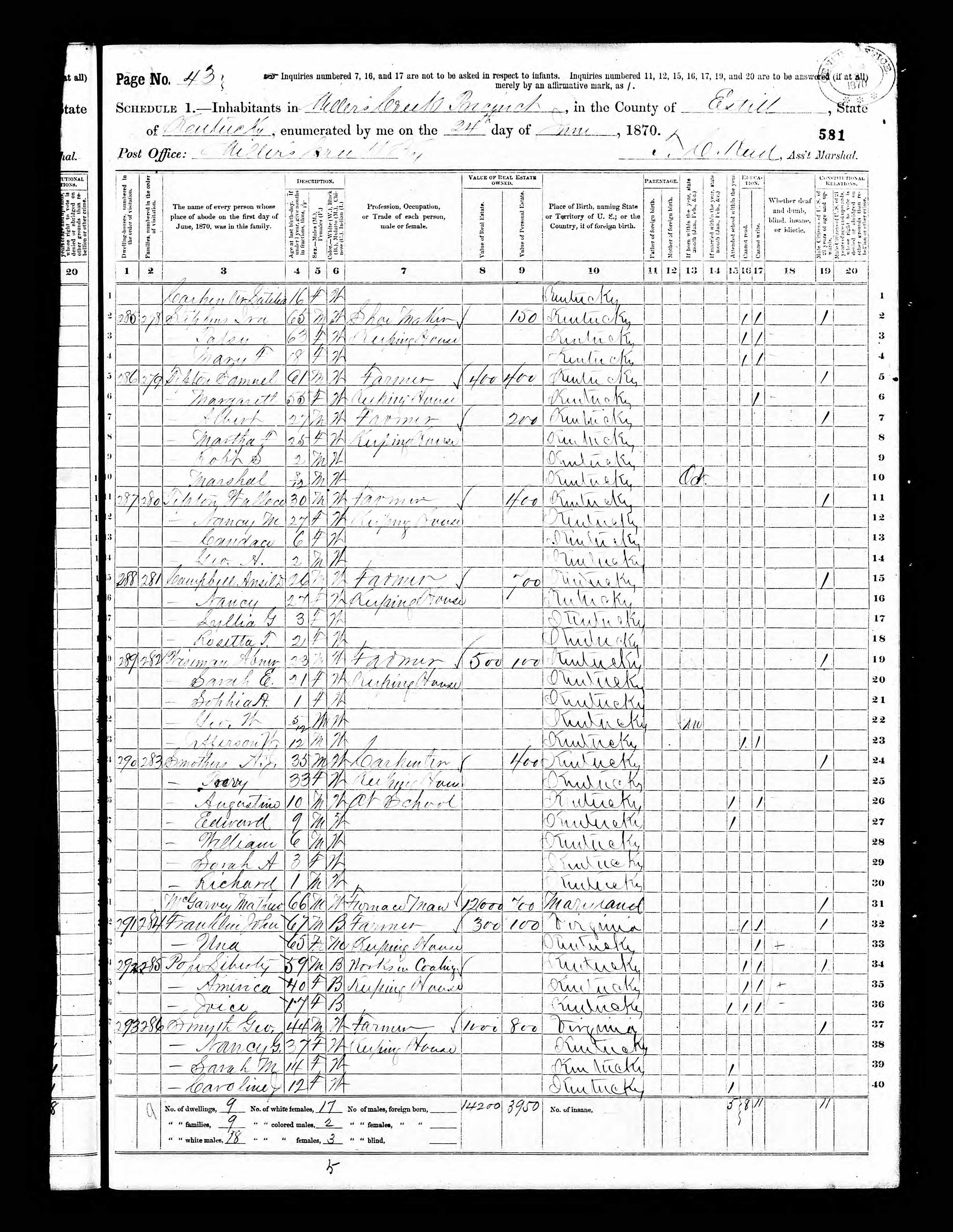
1870 Census Entry for Matthew McGarvey
Miller’s Creek Precinct, Estill County, Kentucky
This 1870 census places Matthew McGarvey in Estill County, Kentucky, after Eunice’s death, living near but not inside the household of a close family member.
Location: Miller’s Creek Precinct, Estill County, Kentucky Date enumerated: June 24, 1870 Household context:
Smothers, A. J., age 35, male, carpenter, born Kentucky
Smothers, Mary, age 33, female, keeping house, born Kentucky
Smothers, Augustus, age 10, male, at school, born Kentucky
Smothers, Edward, age 9, male, born Kentucky
Smothers, William A., age 6, male, born Kentucky
Smothers, Sarah A., age 3, female, born Kentucky
Smothers, Richard, age 1, male, born Kentucky
Following entry:
McGarvey, Mathew, age 66, male, furnace man, born Maryland Real estate: $1,200 Personal estate: $60
Note: Matthew appears immediately after the Smothers household and before the Franklin household. The layout suggests he may have been enumerated as a separate nearby resident or as a non-family person connected to the surrounding household context.
Interpretation
This is an important outlier record because it places Matthew McGarvey in Estill County, Kentucky, after the death of his wife Eunice in 1868, rather than in Ohio with one of his known children. His age, 66, and birthplace, Maryland, fit the stronger late-life evidence pointing to a birth around 1802 to 1804. The household context remains unusual: Matthew appears near the Smothers family, but not clearly with a wife, child, or known McGarvey relative. This may suggest that he was boarding, living temporarily with acquaintances, working near an industrial site, or moving between family networks after Eunice’s death.
This entry also complicates the idea that Matthew was already dependent or impoverished after Eunice died. In 1870, he is listed with $1,200 in real estate and $60 in personal property, showing that he still had meaningful economic standing. His occupation appears to read furnace man rather than farmer, which may point to work connected with Kentucky’s local iron or furnace industry rather than ordinary farm labor. His later appearance in the county infirmary therefore seems to reflect a decline after 1870 rather than a long-term condition. Overall, the record provides strong age, birthplace, and economic evidence, while leaving his Kentucky household situation and work context as open questions in the family narrative.
Marriage Record
1835 Marriage Record for Matthew McGarvey and Eunice Grimes
Lawrence County, Ohio
This marriage record documents the union of Matthew McGarvey and Eunice Grimes in Lawrence County, Ohio, in March 1835.
Location: Lawrence County, Ohio Date of marriage: March 1, 1835 Parties: Matthew McGarvey and Eunice Grimes Officiant: John H. Chaffin, Justice of the Peace Filed: March 31, 1835 Record number: No. 837
Interpretation
This is one of the foundational records in Matthew McGarvey’s life because it firmly places him in Lawrence County, Ohio, by 1835 and establishes his marriage to Eunice Grimes. The record anchors the early family timeline and confirms the Grimes connection that appears again in the 1840 census, where Eunice is listed near Hamilton Grimes. It also provides a key chronological marker that helps evaluate age discrepancies in later records, since Matthew must have been an adult by 1835, which conflicts with the much younger ages reported in some of his military records. This marriage record therefore serves as a baseline for reconstructing both his age and early settlement in Ohio.
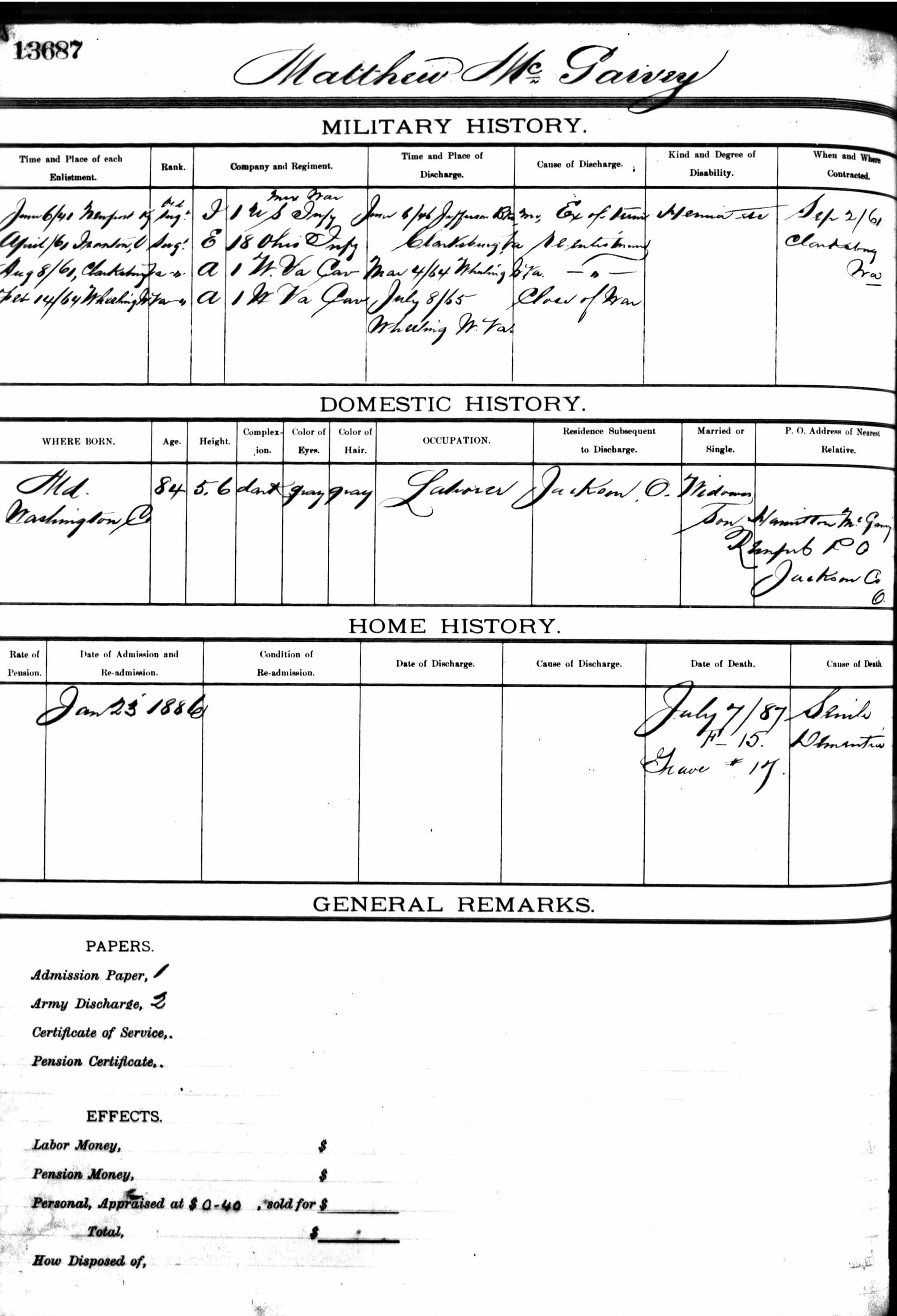
Soldiers’ Home Register
1887 Military, Domestic, and Home History
National Home for Disabled Volunteer Soldiers
This Soldiers’ Home record summarizes Matthew McGarvey’s Regular Army service, Civil War service, personal description, death, and nearest relative, naming Hamilton McGarvey of Jackson County, Ohio.
Military History Enlistment 1: June 6, 1841, Newport [Ky.] Rank: Private Company and regiment: D, 1 U.S. Dragoons Discharge: June 6, 1846, Jefferson Barracks, Missouri Cause of discharge: Expiration of term
Enlistment 2: April 16, 1861, Ironton, Ohio Rank: Sergeant [appears to read “Sergt.”] Company and regiment: Company E, 18th Ohio Infantry Discharge: Clarksburg, Virginia Cause of discharge: Re-enlistment Enlistment 3: May 8, 1861, Clarksburg, Virginia Rank: Sargeant Company and regiment: A, 1st West Virginia Cavalry Discharge: May 4, 1864, Wheeling, West Virginia Cause of discharge: Re-enlistment Disability: Rheumatism When and where contracted: September 21, 1861, Clarksburg, Virginia
Enlistment 4: February 14, 1864, Wheeling, West Virginia Rank: Sergeant Company and regiment: A, 1st West Virginia Cavalry Discharge: July 8, 1865, Wheeling, West Virginia Cause of discharge: Close of war
Domestic History Birthplace: Maryland, Washington County Age: 84 Height: 5 feet 6 inches Complexion: Dark Color of eyes: Gray Color of hair: Gray Occupation: Laborer Residence subsequent to discharge: Jackson, Ohio Married or single: Widower Nearest relative: Son, Hamilton McGarvey, Kemble P.O., Jackson County, Ohio
Home History Date of admission: January 23, 1886 Date of death: July 7, 1887 Cause of death: Senile dementia Grave: H. 15 Section: 17
Papers listed:
Admission paper: 1
Army discharge: 3
Certificate of service: blank
Pension certificate: blank
Interpretation
This is one of the strongest late-life identity records for Matthew McGarvey because it ties together his early Regular Army service, his Civil War service, his physical description, his Maryland birthplace, his death, and his nearest living family contact. The record is especially valuable because it names Hamilton McGarvey of Jackson County, Ohio, as Matthew’s son and nearest relative, directly connecting the Soldiers’ Home record to the known McGarvey family line.
Matthew’s Ohio service appears to have been a brief early Civil War enlistment beginning April 16, 1861, at Ironton, Ohio, in Company E, 18th Ohio Infantry. The Soldiers’ Home record appears to list his rank as sergeant and shows that this service ended at Clarksburg, Virginia, by re-enlistment. This helps explain why later grave and burial records identify him with the 18th Ohio Infantry, even though his main surviving Civil War muster-roll sequence follows Company A, 1st West Virginia Cavalry.
Outside the individual muster-roll cards, the evidence suggests that Matthew McGarvey was recorded as a sergeant in his brief Company E, 18th Ohio Infantry service beginning April 16, 1861, and was later associated with the rank of sergeant in Company A, 1st West Virginia Cavalry. Without the muster rolls, however, the exact date of his promotion within the West Virginia cavalry cannot be fixed.
The military history is also important because it helps explain why later burial and headstone records associate Matthew with Company E, 18th Ohio Infantry, even though his surviving Civil War muster cards center on Company A, 1st West Virginia Cavalry. This register records multiple service periods, including earlier Regular Army service, an Ohio infantry entry, and two West Virginia cavalry enlistments. Some dates and unit details should still be checked against the individual service cards, but the record shows how the Soldiers’ Home understood Matthew’s full military history at the end of his life.
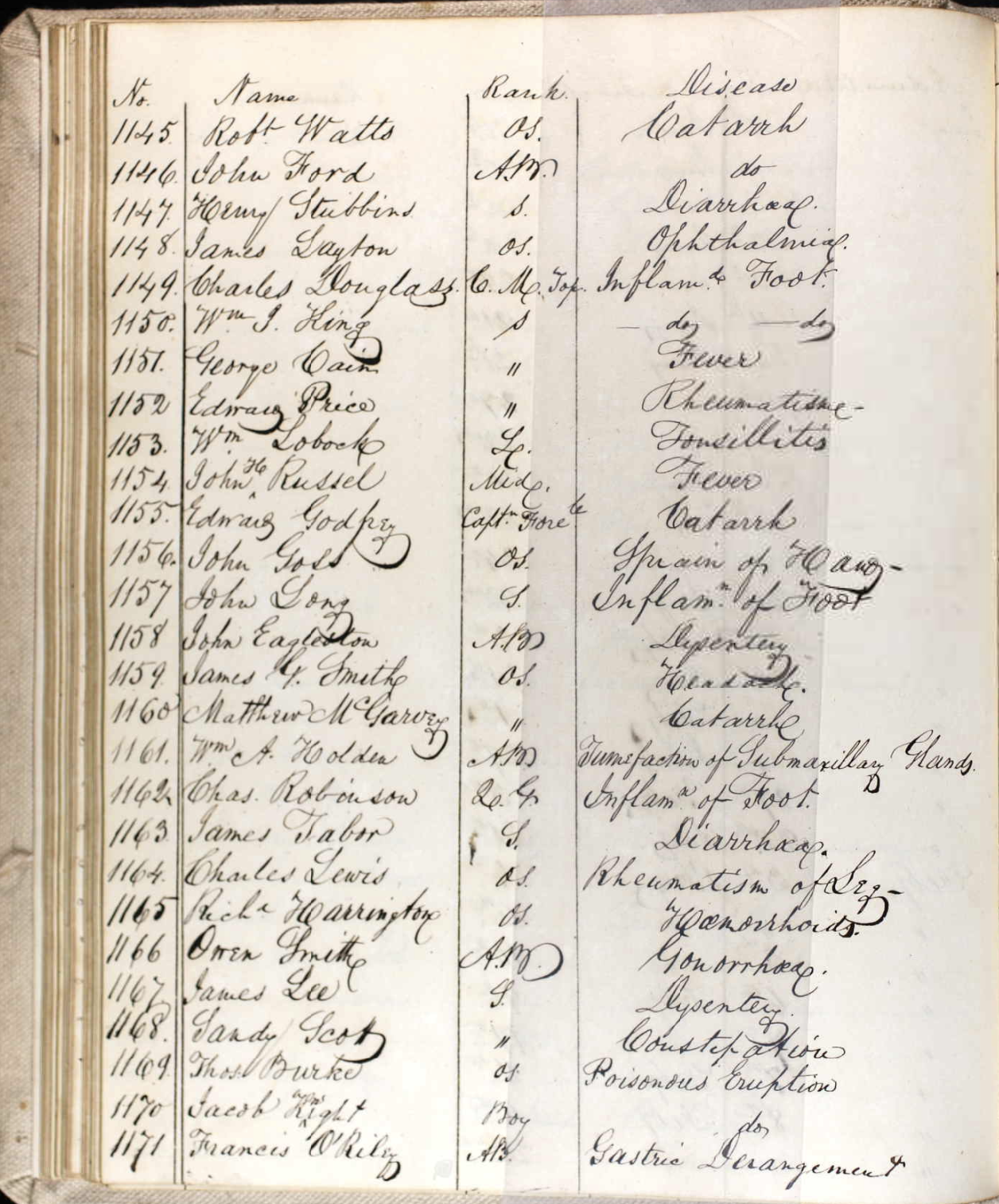
Medical Record
Naval Hospital Patient Register Entry
U.S. Naval Hospital Register, ca. 1887
This hospital register records Matthew McGarvey as a patient late in life, providing insight into his medical condition during his final years.
Register number: 1160 Name: Matthew McGarvey Rank: [unclear, appears ditto mark from above] Disease / condition: Catarrh Context: Entry appears among other enlisted men receiving treatment for a range of conditions including rheumatism, fever, and inflammation-related illnesses.
Interpretation
This record is important because it gives a specific medical diagnosis for Matthew McGarvey late in life: catarrh, a term commonly used in the 19th century to describe inflammation of the mucous membranes, especially of the respiratory tract. This condition often involved chronic congestion, coughing, and general respiratory weakness, and in older individuals could significantly affect overall health and resilience.
When read alongside his Soldiers’ Home record, which lists rheumatism and ultimately senile dementia as contributing to his decline, this entry helps build a clearer picture of Matthew’s final years. Rather than a single illness, he appears to have suffered from multiple chronic conditions common among aging veterans, including respiratory disease and long-term physical deterioration. This supports the interpretation that his move into institutional care was the result of cumulative health decline rather than a sudden event.
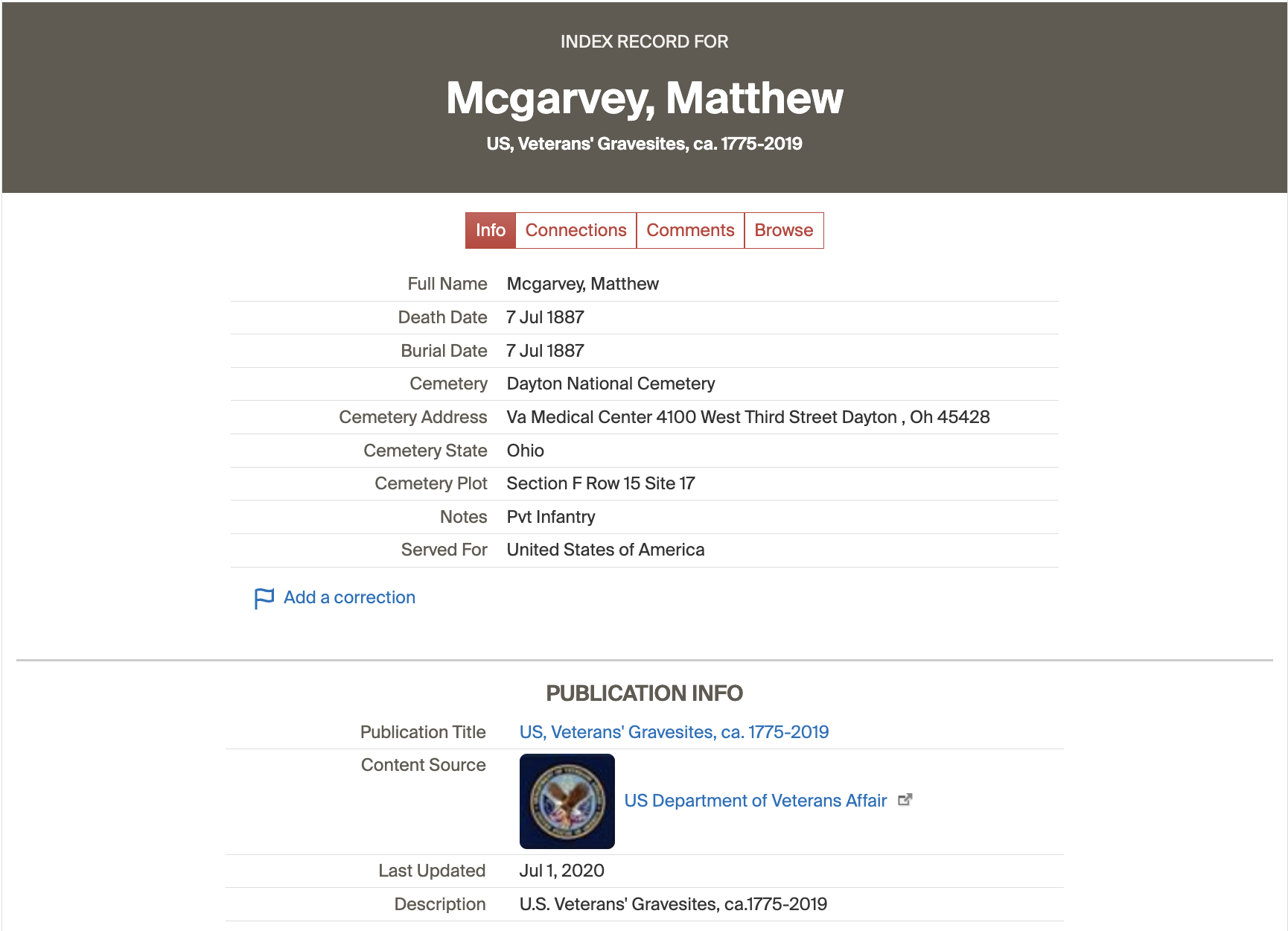
Burial Record
U.S. Veterans Gravesite Index Entry
Dayton National Cemetery, Ohio · 1887
This index entry confirms the death and burial of Matthew McGarvey at Dayton National Cemetery, linking his final institutional care with his permanent burial as a veteran.
Name: Matthew McGarvey Death date: July 7, 1887 Burial date: July 7, 1887 Cemetery: Dayton National Cemetery, Dayton, Ohio Plot: Section F, Row 15, Site 17 Service: United States Army Note: Listed as Pvt Infantry (likely simplified or clerical classification)
Interpretation
This record firmly anchors the end of Matthew McGarvey’s life within the federal veterans’ care system. His burial at Dayton National Cemetery connects directly to his residence at the National Soldiers’ Home, where many veterans who died in care were interred. :contentReference[oaicite:0]{index=0}
The classification of “Pvt Infantry” reflects a simplified or administrative designation rather than his full service history, which included both Ohio infantry and West Virginia cavalry service. This kind of generalization is common in later burial indexes and should not be read as contradicting earlier records showing rank progression and multiple enlistments.
When combined with the Soldiers’ Home register and infirmary records, this entry completes the final sequence of his life: declining health, institutional care, death on July 7, 1887, and burial in a national cemetery reserved for veterans. :contentReference[oaicite:1]{index=1}
Historical Context
Regular Army Infantry and Frontier Service Context
U.S. Army Center of Military History and National Park Service
This context card explains the small Regular Army world in which Matthew McGarvey served with Company I, 1st U.S. Infantry from 1841 to 1846.
Context: The pre-Civil War Regular Army was small and scattered across frontier and coastal posts. Units were often deployed in company-size detachments or smaller groups. Infantry soldiers served as foot soldiers, while dragoons were mounted troops trained to fight on horseback and on foot. Connection to Matthew: Matthew McGarvey’s records identify him with Company I, 1st U.S. Infantry, from 1841 to 1846. This card provides general context for that service, not proof of a specific post or expedition.
Interpretation
This source context is useful because it frames Matthew’s early military life as Regular Army infantry service before and at the opening of the Mexican-American War. The Army’s Mexican War overview describes a very small Regular Army, scattered across frontier and coastal posts, with companies often serving in small detachments rather than as fully assembled regiments. That fits Matthew’s Company I service more closely than a later Civil War-style image of large regiments moving together.
The same context also helps explain the shape of Matthew’s enlistment. Regular Army infantrymen served five-year terms, matching Matthew’s 1841 to June 1846 service, and received low monthly pay in a demanding professional army. Because the Mexican War began in May 1846, Matthew was still technically in the Regular Army at the opening of the conflict. The surviving records, however, point to discharge at Jefferson Barracks in June 1846, not to service in Mexico.
Because these sources do not name Matthew directly, this card should be used as background. The Army enlistment register, graves registration card, and Jefferson Barracks evidence remain the direct evidence for his individual service.
Military Context
Company I, 1st U.S. Infantry at Jefferson Barracks (1845)
Banta, History of Jefferson Barracks
This source places Company I, 1st U.S. Infantry at Jefferson Barracks in late 1845, directly within the final year of Matthew McGarvey’s documented enlistment (1841–1846).
Source: Byron Bertrand Banta Jr., A History of Jefferson Barracks, 1826–1860
Page 163–164:
“The headquarters and four companies of the regiment arrived on September 23, 1845, from Fort Crawford; Company I, from Fort Winnebago, on September 19; and Company F, from Fort Snelling, on October 2.”
Page 166:
“During the first week of December 1845, Captain William R. Jouett, Company I, First Infantry, arrived at Jefferson Barracks and claimed the quarters occupied by Captain and Brevet Major John J. Abercrombie, commanding officer, Company K, First Infantry, by right of seniority.”
Page 169:
“Companies C, E, G, and K were designated as the ones to be transferred,” when a battalion of the 1st Infantry was ordered from Jefferson Barracks to Texas in April 1846. The battalion left the post on May 2, 1846, by way of New Orleans.
Page 171:
After the Texas-bound battalion departed, Jefferson Barracks was left with a very small garrison during May, June, and July 1846, including “two understrength companies of the First Infantry which had been left behind.”
Interpretation
This is one of the strongest contextual sources for Matthew McGarvey’s early military service. His own records place him in Company I, 1st U.S. Infantry from 1841 to 1846, with discharge at Jefferson Barracks. This source independently confirms that Company I was physically present at Jefferson Barracks beginning in September 1845 and that Captain William R. Jouett of Company I was still connected to the post in December 1845.
Although Matthew is not named individually, the alignment is precise: his company, his regiment, his location, and the correct time window. This strongly supports the conclusion that Matthew was likely present at Jefferson Barracks during the final year of his enlistment, immediately prior to his June 1846 discharge.
The deeper reading also helps define what should not be claimed. When the War Department ordered a battalion of the 1st Infantry from Jefferson Barracks to Texas in spring 1846, Banta names Companies C, E, G, and K as the companies transferred. Company I is not listed among them. Banta then notes that two understrength companies of the 1st Infantry remained at Jefferson Barracks during May, June, and July 1846, but does not identify those two companies by letter. This does not prove Company I stayed behind, but it does support caution against placing Matthew in the Texas or Mexican theater.
This document therefore bridges the gap between individual service records and unit-level history, anchoring Matthew’s otherwise abstract enlistment to a specific place, command structure, and moment in time on the western frontier. The best-supported interpretation remains Fort Winnebago to Jefferson Barracks in late 1845, followed by discharge at Jefferson Barracks in June 1846, rather than confirmed Mexican War field service.
Officer Profile
William Robards Jouett, Company I, 1st U.S. Infantry
Career Regular Army officer connected to Matthew’s Company I service
This card gathers the evidence for Captain William R. Jouett, the Company I officer most closely connected to Matthew McGarvey’s likely Jefferson Barracks setting in late 1845 and early 1846.
Banta, page 166: Captain William R. Jouett of Company I, 1st Infantry, arrived at Jefferson Barracks in December 1845 and claimed quarters by seniority. Banta states that Jouett entered the Army as a second lieutenant in the 1st Infantry on February 19, 1818, became first lieutenant in 1819, and captain on May 1, 1829.
Banta, page 196: Jouett appears later as a permanent major with a date of rank of October 31, 1846. Banta describes his career as long but not especially distinguished and states that he died in 1852.
Jack Jouett House Historic Site: Identifies William Robards Jouett as a son of Jack Jouett, says he spent most of his life as a soldier, rose to lieutenant colonel, married Sarah Strother Taylor as his second wife, and was buried with family at Zachary Taylor National Cemetery in Louisville, Kentucky.
Find a Grave memorial: The memorial for William Robards Jouett gives the same identity and burial context. It is useful for burial correlation, while the military career should be grounded mainly in Banta and Army-register sources.
Interpretation
Jouett gives Matthew’s Company I service a human command context. Matthew’s own records identify Company I, 1st U.S. Infantry service from 1841 to 1846, while Banta places Captain William R. Jouett of Company I at Jefferson Barracks in December 1845. That makes Jouett the best-supported company-level officer connected to Matthew’s likely final Regular Army station.
The evidence does not prove that Matthew personally interacted with Jouett, and it does not make Jouett the overall post commander. It does show that Company I was part of an old-army command structure led by long-serving officers whose careers stretched back to the frontier army after the War of 1812.
The grave image is linked from Find a Grave and should be read as burial context rather than military evidence. The Jack Jouett House Historic Site supplies the family and biographical identification, while Banta and Army-register sources remain the stronger evidence for Jouett’s Company I service and rank history.
War Department Orders
General Orders Index: 1st Infantry from Florida to the Upper Mississippi and Texas
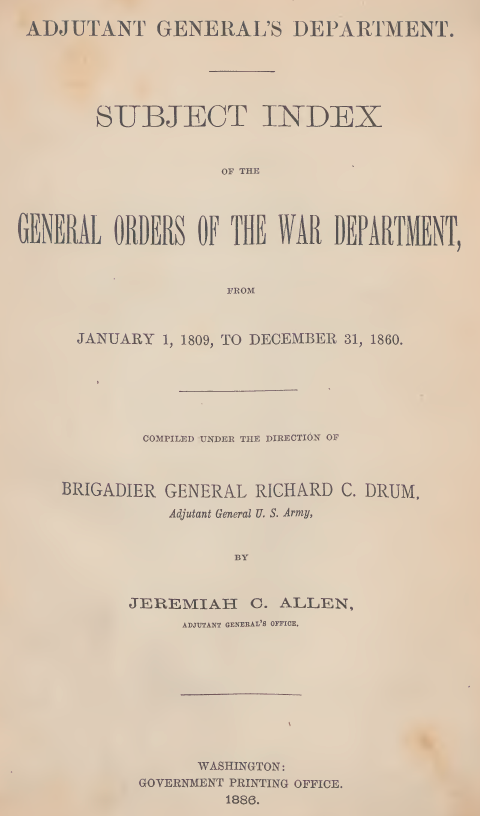
Adjutant General’s Office, Subject Index of General Orders
This General Orders index helps trace the 1st U.S. Infantry during Matthew McGarvey’s Regular Army service, from the post-Seminole War move to the Upper Mississippi frontier to the 1845 movement toward Texas.
Source: Adjutant General’s Office, Subject Index of the General Orders of the War Department, from January 1, 1809, to December 31, 1860 Entry: Infantry, First Regiment
1841 movement: Headquarters established at Fort Crawford, General Order No. 34, 1841. Related 1841 distribution: The 1st Regiment of Infantry was to be withdrawn from Florida and proceed to the Upper Mississippi, where it would be posted as follows: three companies at Fort Snelling, five companies at Fort Crawford, one company at Fort Atkinson, and one company at Fort Winnebago.
1845 movement: Sent to Texas, General Order No. 32, 1845.
Interpretation
This index is important because it gives a unit-level setting for Matthew McGarvey’s 1841 to 1846 enlistment in Company I, 1st U.S. Infantry. The 1841 entries show the regiment moving out of the Florida service context and into the Upper Mississippi frontier, with headquarters at Fort Crawford and companies distributed among Fort Snelling, Fort Crawford, Fort Atkinson, and Fort Winnebago.
The 1845 entry then shows the 1st Infantry being sent to Texas, matching the broader military shift toward the Mexican-American War. When combined with the Jefferson Barracks evidence showing Company I arriving from Fort Winnebago in September 1845, the movement pattern becomes clearer: Matthew’s Company I service likely belonged to the Upper Mississippi frontier system before the regiment was drawn south toward Texas near the end of his enlistment.
This does not prove every post Matthew personally occupied, but it narrows the most likely geography of his service. Company I is best connected to Fort Winnebago before Jefferson Barracks, because the Jefferson Barracks source identifies Company I as arriving from Fort Winnebago on September 19, 1845. The General Orders index therefore turns the abstract phrase “Company I, 1st U.S. Infantry” into a more specific frontier route: post-Seminole War Upper Mississippi service, likely Fort Winnebago, then Jefferson Barracks during the Mexican War mobilization period.
Military Context
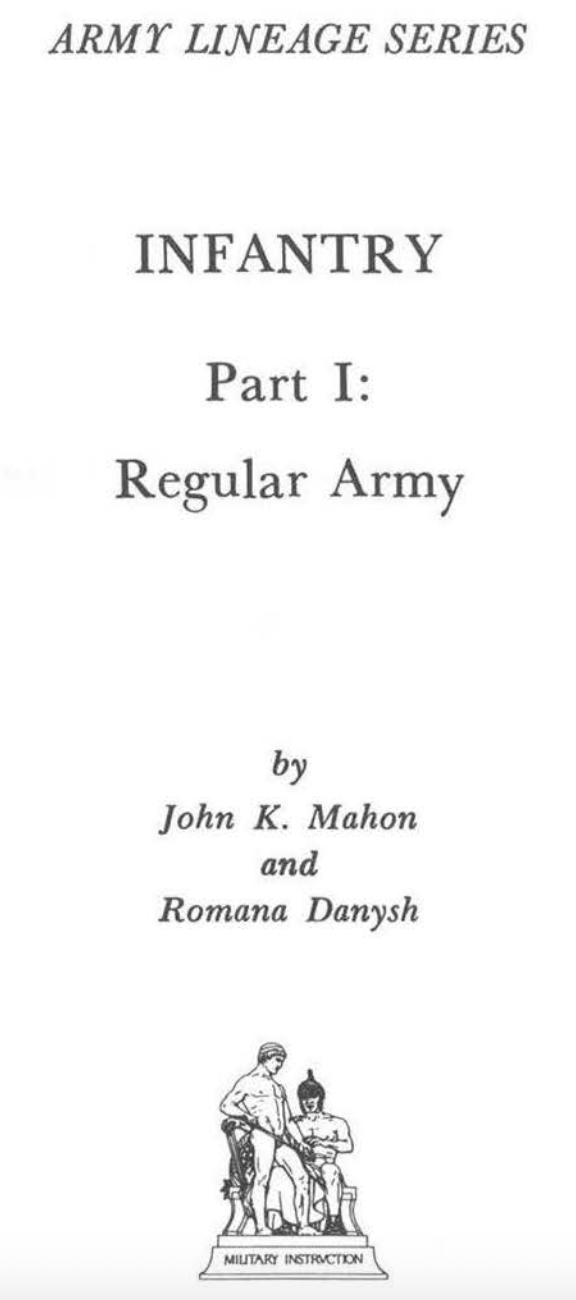
History of the Organization of the U.S. Army Infantry
Army Lineage Series, Office of the Chief of Military History
This official Army history provides context for Regular Army infantry organization during Matthew McGarvey’s 1841 to 1846 service.
Source: John K. Mahon and Romana Danysh, Infantry, Part I: Regular Army Publisher: Office of the Chief of Military History, United States Army Date: 1972
Relevant context: The source explains that after the 1821 reduction, the Regular Army infantry consisted of a small number of foot regiments with very small company strength. The Second Seminole War forced an expansion in 1838, but after the Florida war ended in 1842, regiments and companies were again reduced. At the start of the Mexican War, Congress first tried to rely on the existing Regular infantry regiments before adding new regiments during the conflict.
Company lettering: The source also explains that infantry companies were officially designated by letters A through K, with no Company J because J was easily confused with I in writing.
Interpretation
This source does not name Matthew McGarvey, but it helps explain the military system in which he served. His Company I, 1st U.S. Infantry service took place in a small Regular Army that had recently been expanded for the Second Seminole War and then reduced again before the Mexican War. This makes his service part of the professional frontier army rather than a short-term volunteer force.
The explanation of company lettering is also useful for Matthew’s records. Because nineteenth-century infantry companies used letters A through K and skipped J, Company I was a standard company designation. This helps explain why handwritten company letters in later records may be difficult to read but still fit the official company system.
The infantry history also supports the larger interpretation of Matthew’s service as small-company Regular Army duty. The regiment was part of an army that expanded and contracted around frontier crises, especially the Second Seminole War and the Mexican War. Matthew’s Company I service therefore belongs to the period when the Regular infantry was being shifted from Florida service into frontier posts and then toward the national mobilization that preceded the Mexican War.
Photograph
Grand Review of the Armies, Cavalry on Pennsylvania Avenue
Library of Congress, Prints and Photographs Division
This photograph provides visual context for the Grand Review of the Armies, where Union cavalry paraded through Washington, D.C., after the Civil War.
Source: Mathew B. Brady, Washington, District of Columbia. Grand Review of the Army [Cavalry] Repository: Library of Congress Prints and Photographs Division Digital ID: cwpb.02821 Date: May 1865
Interpretation
The image does not identify the exact cavalry unit shown, but it helps illustrate the public military setting in which Union cavalry units, including West Virginia veterans connected to Capehart’s brigade, were celebrated at the close of the war.
Photograph
Charles E. Capehart, 1st West Virginia Cavalry
U.S. Department of War, Medal of Honor Monday Feature
Charles E. Capehart served in the 1st West Virginia Cavalry and received the Medal of Honor for action after Gettysburg.
Source: “Medal of Honor Monday: Army Lt. Col. Charles E. Capehart” Publisher: U.S. Department of War URL: https://www.war.gov/News/Feature-Stories/Story/Article/3818360/medal-of-honor-monday-army-lt-col-charles-e-capehart/
Interpretation
Capehart’s service helps place Matthew McGarvey’s regiment within the larger record of the 1st West Virginia Cavalry, especially its Gettysburg and post-Gettysburg cavalry service.
Military Roster
Roster of the 1st West Virginia Cavalry, Company A
West Virginia Civil War, Linda Fluharty
This roster lists Matthew McGarvey as a sergeant in Company A, 1st West Virginia Cavalry.
Source: Linda Fluharty, “Roster, 1st West Virginia Cavalry” Website: West Virginia Civil War Relevant entry: McGARVEY, Mathew - Co. A - Sgt.
Interpretation
This compiled roster confirms Matthew’s company assignment and rank, supporting the muster roll evidence that places him in Company A of the 1st West Virginia Cavalry.
Hospital Illustration
Harewood General Hospital, Washington, D.C.
Charles Magnus lithograph, Civil War hospital site
Harewood General Hospital was a major Union hospital in Washington, D.C., where Matthew McGarvey was listed on hospital muster rolls in 1865.
Source: Charles Magnus, Harewood Hospital, Washington, D.C. Format: Lithograph Date: 1864 Repository noted: Cushing/Whitney Medical Library, Yale University
Harewood General Hospital operated in Washington, D.C., from September 4, 1862, to May 5, 1866. It was located on the former Corcoran Farm near present-day Georgia Avenue NW and became one of the major Union hospital sites serving wounded and recovering soldiers during the Civil War.
Interpretation
Matthew McGarvey’s records place him at Harewood U.S.A. General Hospital beginning on April 30, 1865. A hospital muster roll for March and April 1865 lists him as a sergeant in Company A, 1st West Virginia Cavalry, present in Ward 24 and “attached to hospital” on April 30, 1865.
A second hospital roll dated June 30, 1865 places Matthew at Harewood again, this time in Ward 8, still present and still attached from April 30, 1865. His company muster-out roll dated July 8, 1865 also states “In Hospital” and notes that a descriptive roll was forwarded.
The muster cards do not state the specific illness or wound. The safest interpretation is that Matthew was formally carried on hospital rolls at Harewood from April 30 through at least June 30, 1865, and was still noted as “In Hospital” when the company completed its July 1865 muster-out paperwork.
Photograph
Henry Capehart, 1st West Virginia Cavalry
West Virginia University Libraries, OnView
Henry Capehart served as surgeon, colonel, brigade commander, and Medal of Honor recipient connected to the 1st West Virginia Cavalry.
Source: “Henry Capehart” Repository: West Virginia & Regional History Center, West Virginia University Libraries Catalog: OnView, no. 001282 URL: https://onview.lib.wvu.edu/catalog/001282
Interpretation
Henry Capehart began the Civil War as the original surgeon of the 1st West Virginia Cavalry, then known as the 1st Loyal Virginia Cavalry. He later became colonel of the regiment and rose to command a cavalry brigade in the Army of the Shenandoah. His veteran command became known as “Capehart’s Fighting Brigade.”
Capehart received the Medal of Honor for his actions at the Greenbrier River, West Virginia, on May 22, 1864, when he saved Private Watson Karr from drowning while under fire.
In the closing months of the war, Capehart’s brigade served in Custer’s division during the Appomattox Campaign. His leadership gives broader military context to Matthew McGarvey’s late-war service in the 1st West Virginia Cavalry.
Section IX
Legacy and Recognition
Recovering Matthew McGarvey’s Medal
As part of the continuing effort to document Matthew McGarvey’s life and service, proof of descent was submitted for his previously unclaimed Civil War medal. The claim was preliminarily approved. This modern recognition adds a final chapter to Matthew’s story, linking the surviving military record to a living family line.
Section X
Bibliography
The following bibliography gathers the primary and secondary sources used throughout this project. Entries are grouped by type and formatted in Chicago-style bibliography form.
Federal and State Records
Ancestry.com. Maryland, U.S., Compiled Marriages, 1655-1850 [database on-line]. Provo, Utah: Ancestry.com Operations Inc., 2004. Original data: Jordan Dodd, Liahona Research, comp., Maryland Marriages, 1655-1850. Entry for Catherine Myers and Edward McGarvey, Washington County, Maryland, 10 July 1808.
United States Census Bureau. Fourth Census of the United States, 1820. Edward McGarry or McGarvey household, Belfast Township, Bedford County, Pennsylvania.
United States Census Bureau. Seventh Census of the United States, 1850. Edward and Catherine McGarvey household, Belmont County, Ohio.
United States Census Bureau. Eighth Census of the United States, 1860. Catherine McGarvey and nearby Littlejohn household, Vernon Township, Scioto County, Ohio.
Banta, Byron Bertrand Jr. A History of Jefferson Barracks, 1826–1860. PhD diss., Louisiana State University and Agricultural and Mechanical College, 1981.
Graves Registration Card for Matthew McGarvey. Soldiers’ Home Cemetery, Dayton, Ohio.
Lawrence County, Ohio, Marriage Record. Hamilton Grimes and Mary Silliman, 2 December 1834.
Lawrence County, Ohio, Marriage Record. Matthew McGeavy and Eunice Grimes, 1 March 1835.
Lawrence County, Ohio. Death record for Eunice McGarvey, August 24, 1868.
Missouri Civil War Museum. “Jefferson Barracks.” Missouri Civil War Museum. Accessed April 26, 2026. https://mcwm.org/our-story/jefferson-barracks/.
Mahon, John K., and Romana Danysh. Infantry, Part I: Regular Army. 1972.
National Home for Disabled Volunteer Soldiers. Record for Matthew McGarvey, no. 13687.
National Park Service. “Weapons-Historic Background.” 2017.
National Park Service. “Infantry Soldier-Daily Life.” 2025.
U.S. Census Bureau. 1830 Census, Lawrence County, Ohio.
U.S. Census Bureau. 1850 Census, Lawrence County, Ohio.
United States Army. Discharge record listing Matthew McGarvey, June 1846.
United States Army. Register of Enlistments, entry for Matthew McGarvey.
United States Census Bureau. Sixth Census of the United States, 1840. Eunice McGarvey household, with nearby Hamilton Grimes and Edward McGarvey entries, Elizabeth Township, Lawrence County, Ohio.
U.S. Census Bureau. Ninth Census, 1870, Estill County, Kentucky.
U.S. Department of Veterans Affairs. U.S. Veterans Gravesites.
U.S. Navy. Registers of Patients at Naval Hospitals.
West Virginia Adjutant General’s Office. Annual Report, 1865.
U.S. Army Center of Military History. The Occupation of Mexico.
United States War Department. Subject Index of General Orders, 1886.
Secondary and Web Sources
Jack Jouett House Historic Site. “William Robards Jouett.” Accessed April 30, 2026. https://jouetthouse.org/william-robards-jouett/.
Find a Grave. “William Robards Jouett.” Memorial ID 163100097. Accessed April 30, 2026. https://www.findagrave.com/memorial/163100097/william-robards-jouett.
“1st West Virginia Cavalry Regiment.” Wikipedia. Accessed April 29, 2026. https://en.wikipedia.org/wiki/1st_West_Virginia_Cavalry_Regiment.
American Battlefield Trust. “Mount Up! Cavalry Operations in the Gettysburg Campaign.” Accessed April 29, 2026. https://www.battlefields.org/learn/articles/mount-cavalry-operations-gettysburg-campaign.
Newspapers
“Discharged.” Jackson Standard, January 21, 1886. Notice listing Matthew McGarvey, age 84, native of Maryland, sent to the Soldiers’ Home.
“The County Infirmary! List of the County’s Wards!” Jackson Standard, January 7, 1886. Entry for Matthew McGarvey, age 86, born in Maryland.