Rebuilt from the August 15, 2000 Internet Archive capture of the San Dimas High School Mono Lake Living Lab site.

Mono Lake: Living Lab

Mono Lake 2000

San Dimas High School, 800 W. Covina Blvd. San Dimas, CA

A tribute to the June 2000 Living Lab field trip, rebuilt from the archived student web pages.

Introduction

This page preserves the 2000 Mono Lake Living Lab trip as a modern tribute page.

Day 1: Saturday, June 3, 2000

Itinerary

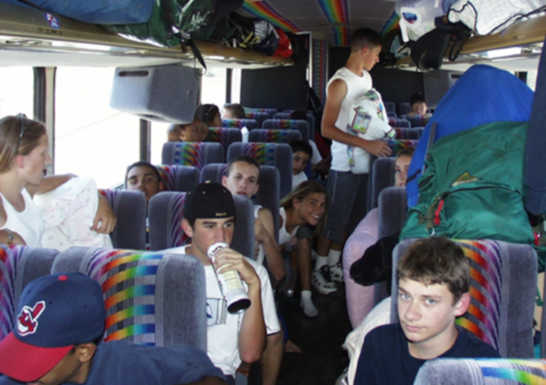
  • 7:45-8:00 AM: Pack the bus and leave San Dimas High School.
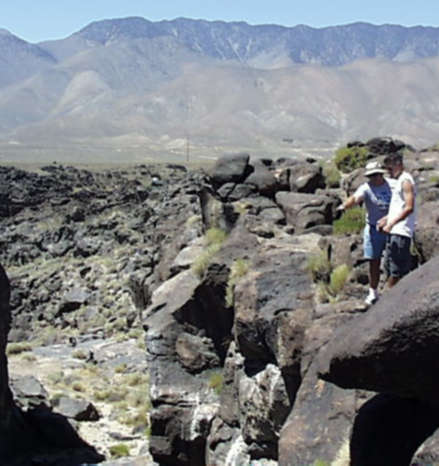
  • 11:30 AM-12:00 PM: Fossil Falls.
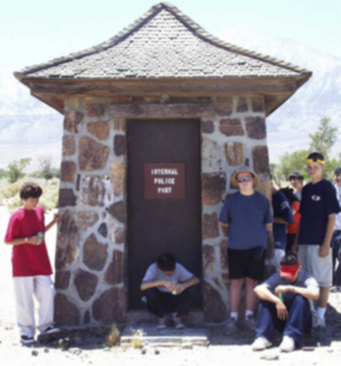
  • 1:00-2:00 PM: Visit Manzanar and eat lunch.
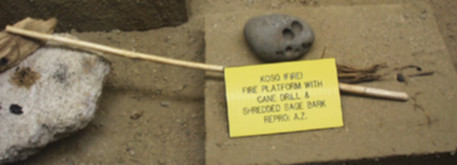
  • 2:00-3:00 PM: Tour the Indian Museum in Bishop.
  • 5:00-6:00 PM: Arrive at June Lake, Pine Cliff Resort, and set up camp.
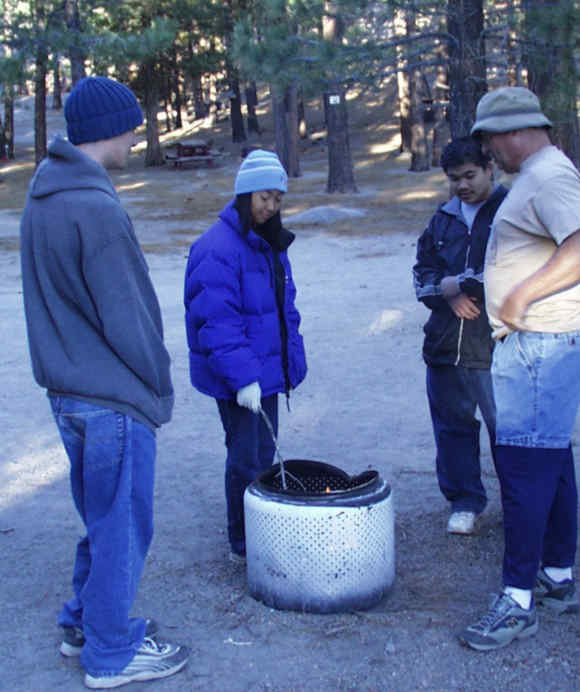
  • 6:00-9:00 PM: Dinner and campfire meeting.

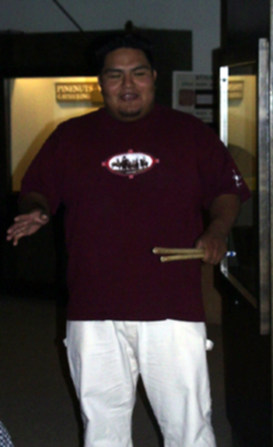
We moved up 395 to the cinder cone. I thought it was cool because of the rock formations. From there we went to the Paiute Museum and learned how prosperous these people were in the past. We were entertained by Eric, a Bishop Paiute, who sang the hand game songs.

Josh, 2000

Day 2: Sunday, June 4, 2000

Itinerary

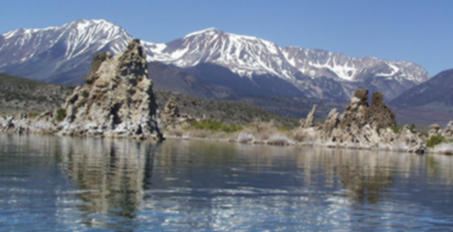
  • Morning: Visit Mono Lake and the South Tufa Reserve.
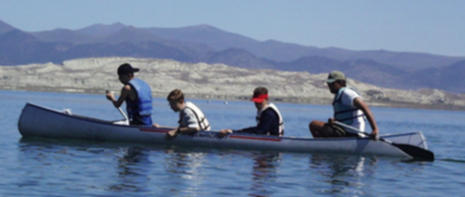
  • Midday: Canoe tour of Mono Lake.
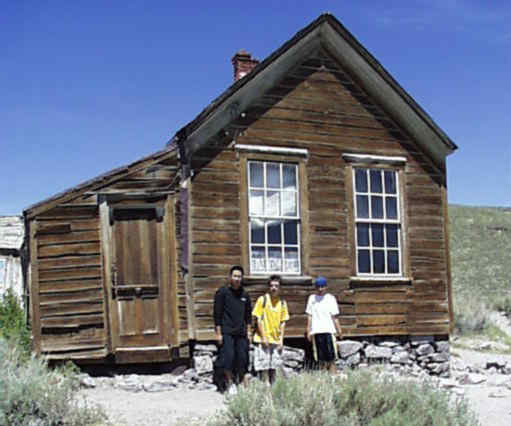
  • Afternoon: Visit Mono Mills and the School House Museum.
  • 3:00-4:30 PM: Climb Panum Crater.
  • Evening: Return to camp by the June Lake Loop, dinner, campfire meeting, and lights out.

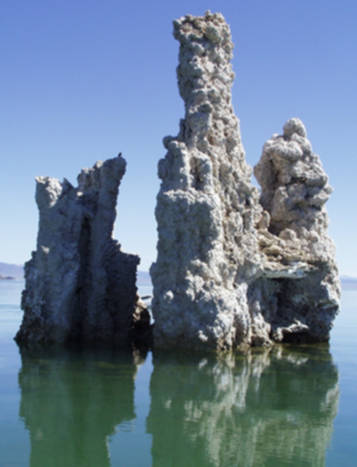
. . . Canoeing in Mono lake. I was a paddler. It was fun. Then we saw brime shrimp mating and Alkaline flies. During the canoe trip, our tour guide was the best. He taught me interesting facts about Mono Lake. He made us close our eyes as we went over the Tufa Springs. It was a powerful, great experience. I will never forgot this.

Sonny, 2000

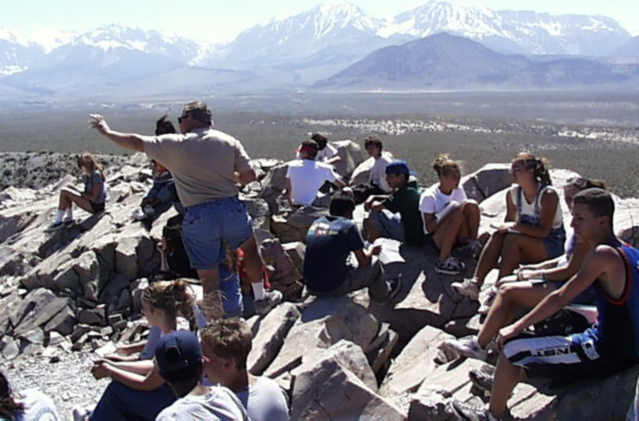
It is our second day here and we have done a lot. Today, we have gone canoeing, hiking, visited two information centers, and climbed to the top of a volcano. The volcanic was an amazing thing. We could see the whole basin and all of Mono Lake. Today, was an exciting day and I actually had fun.

Chris A., 2000

Day 3: Monday, June 5, 2000

Itinerary

  • Morning: Travel from June Lake toward Bodie.
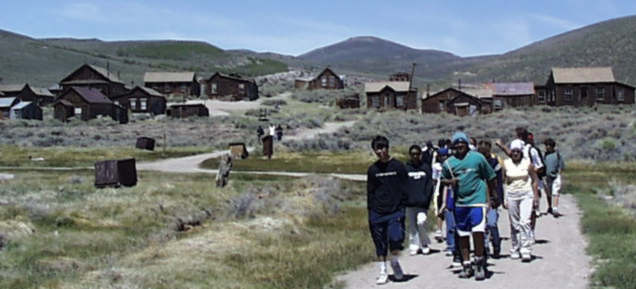
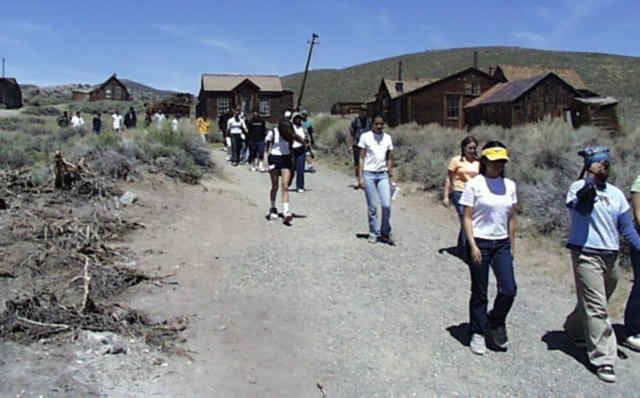
  • Tour Bodie and study mining history, ghost-town landscapes, and local stories.
  • Visit historic buildings, cemetery sites, and mine-tour locations.
  • Evening: Return to camp for dinner, reflection, and a campfire meeting.

. . . Right now sitting out here all I can think about is how beautiful it is. The cool breeze flowing through the hills. With nothing but the sounds of rushing sage brush . . . The crystal blue lake off in the distance then just a turn to the right, snow covered peaks. There are different colors all around me even though it is mainly shades of green and blue. It is still so unique. It is like no other thing I've seen with only scattered trees and rocks. I take one look around and wonder why we have to go home tomorrow.

Amanda, 2000

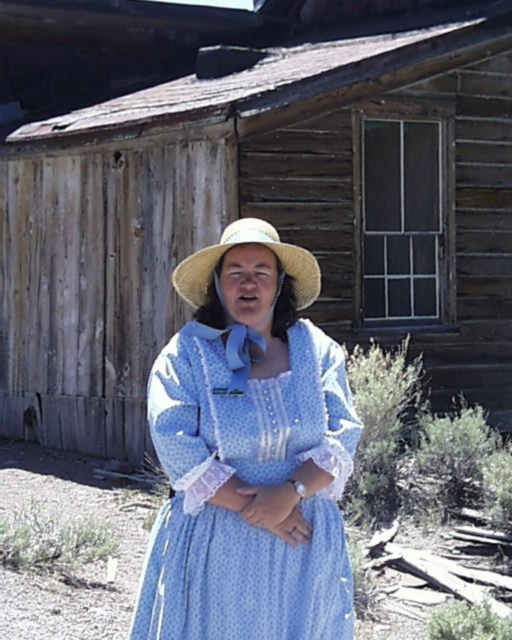
On our last day of sight seeing we went to Bodie. The best part of the day today to me was when one of the tour guides told me how they used to play baseball there, and he showed me where. When I was alone I pictured the field in my head. In my imagination the field kind of looked like the Polo Grounds. The funniest part was when Erin got pooped on by a bird.

Scott, 2000

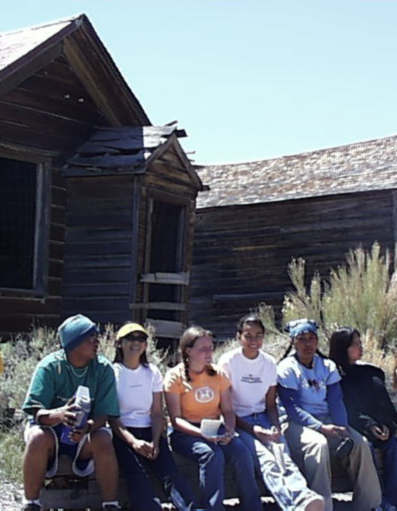
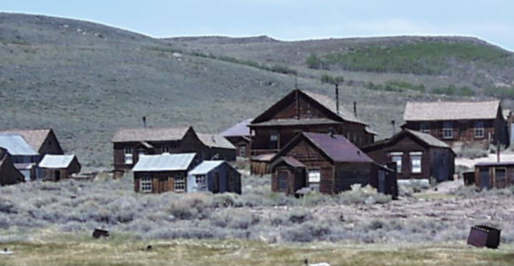
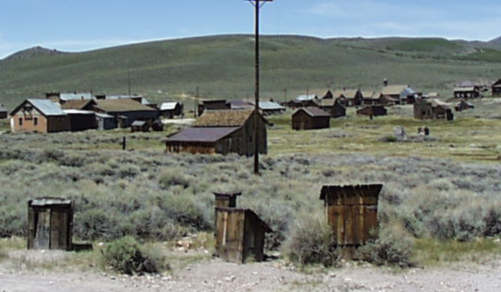
It was very neat at Bodie to see so many buildings still remaining from when they were built in the late 1880's and early 1900's. We went on a tour of a stamp mine pretending like we were going to work there in 1905. We also went to Bodie Cemetery. It was sad to see the grave of a three year old who was killed in an accident with an ax. We also saw Rosa May's grave, but it wasn't inside the fence of the cemetery because she was not a "respectable women". . . Tonight, around the campfire we shared our opinions. . . We said that before we were not really sure about going on the trip, but we are really glad we came because we all had fun.

Erin, 2000

From my experiences in the Boy Scouts, I learned a bit about nature. Then I thought nature was just the forest. I am seeing the big picture now. Nature is not just the forest. It is the sky above you. It is the animals and the birds. It is Mono Lake that many work endlessly to protect. What if this was a city? The sky above you would be blanketed with thick smog. The ground below you would be a freeway or littered with garbage. You would not hear the harmonious songs of the birds but the honks and engines of cars. When the city spreads it scars the beautiful face of nature, instead of helping it.

Josh's campfire comments, 2000

Day 4: Tuesday, June 6, 2000

Itinerary

  • 6:30-7:30 AM: Breakfast and camp cleanup.
  • Morning: Depart June Lake and begin the return trip.
  • Afternoon and evening: Travel back toward San Dimas High School.

I am really going to miss this experience and I will never forget it. It gave me a new perspective on nature and the real issues that are important in our lives. I feel a little ashamed of myself for feeling self-pity, while a whole ecosystem is dying away. Just now, after seeing the actual impact of water diversions, do I actually understand what is happening and how much help it needs.

Last night, when we gathered around the campfire for the last time, I began to see what everyone else was really thinking. As everyone revealed their emotions, I felt comfort in knowing others appreciated the trip as much as I did.

Brian Y., 2000

Student Quotes

"Fossil Falls was truly a spectacular place to visit. The lava formations were inspiring."
"Canoeing ... the first time. It was so much fun."
"Bodie was very interesting ... It was so pretty looking at all the stars around the campfire."
"I found the Indian Paiute Cultural Center very interesting."

Student Writings

The Majestic Mono Lake

Millions of brine shrimp inhabit the lake.

Outstanding canoe trips take us from tufa to tufa.

No matter where you happen to look you will find pure beauty.

Once a lake that flourished to the hills.

Lovely owls nest in the tufa.

Amazing birds migrate to the lake to feast on the surplus of food.

Kids venture to explore the rare beauty of this great lake.

Everyone enjoys snacking on the scrumptious brine shrimp.

Janelle and Isaac, 2000

Poetry: Haikus

A soft breeze flowing

Over the beautiful lake

Crystal blue soft tides.

Amanda, 2000

Bothersome bushes

Poke me along the trail

My leg is bleeding.

Isaac, 2000

Looking at Tufas

Watching brine shrimp have their fun,

A day of good times.

Sonny, 2000

We went to Mono

We went out on the canoes

We came in first place.

Barry, 2000

Brine Shrimp Casserole

Mono Lake's waters

So calm yet so full of life

Are thriving once more.

Janelle, 2000

Canoeing at Mono

Gliding across blue

Gaining speed, gaining control

Mr. O yells, "Stop!"

Brian Y., 2000

"Mono Lake O" Rap

Mono Lake is clear and blue,
we traveled on it in steel canoes.

Larvae and shrimp are what the Paiute eat,
who knows it can be the next white meat.

Bodie is a scary ghost town,
it has gold and saloons all around.

Snow topped mountains, dry desert sands,
all their fates are in our hands.

This trip had many memories to make,
so all we can say now is goodbye Mono Lake!

Writers/Rappers: "Sun Dawg" AKA Sonny and "Gangsta Cracka Jax" AKA Josh
Quotes From Mono Lake

Christina Whitehouse

  • It is as likely as the City of Washington tapping the Ohio River. The response of federal bureaucrats to Fred Eaton's idea of tapping the Owens River.
  • This is a win-win situation for all Californians. Governor Deukmejian's statement on AB 444.
  • The water supply of tomorrow is the water that's already here. Ruth Galanter.
  • Scarcity is characteristic of most resources and something society has to deal with. Economist Kenneth E. Frederick.
  • Goodbye God, I'm going to Bodie. A young girl who left home during the 1800s to go to the mining boomtown of Bodie.
  • Just like with the ozone layer, it only took a little while to breakdown Mono Lake, but it will take many years to repair it. Christina Whitehouse.

Pictures

Projects

The 2000 archive framed the trip around a Mono Lake APPA project. Student groups researched, planned, prepared, and presented web pages about issues connected to Mono Lake.

Research and Web Page

Groups wrote a research paper, created a webliography, gathered trip photographs, and turned their work into a website.

Presentation and Site Work

Students prepared five-minute presentations, note cards with citations, maps, interviews, journals, and collaborative roles.

Topics

The original project topics included geology, Native Americans, human history, water politics, Highway 395, and Manzanar.

Collaboration

Roles included taskmaster, researcher, graphic artist, producer, and presenter.